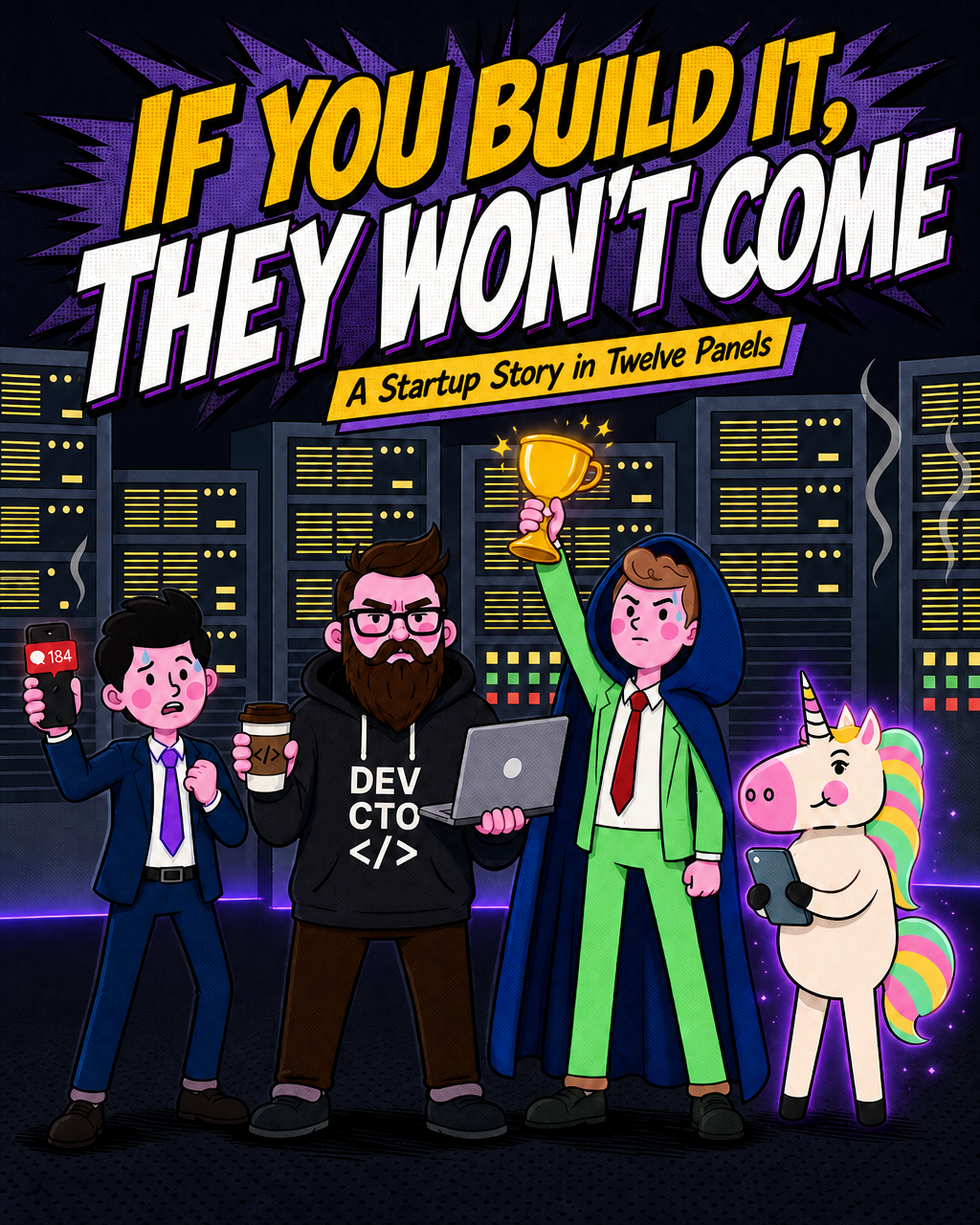
How founders build a content cadence that audiences actually follow
Most founders treat content like a chore they're always behind on. They post something when they get a spare hour, then go quiet for two weeks, then wonder why nobody seems to care. The problem isn't effort. It's structure.
A content cadence that actually builds an audience isn't about posting more. It's about giving people a reason to come back.
Start with a cast, not a calendar
Before you plan what to post, decide who is telling the story.
This sounds obvious, but most founders skip it. They open a blank doc, stare at a blinking cursor, and try to think of "content." That's the wrong starting point. The right starting point is a character: a recurring face or persona that ties every post together, week after week.
Think about the brands you actually follow on social media. You don't follow them because they post on Tuesdays. You follow them because something about their voice, their character, their running narrative pulls you back. A recurring character is the thread that connects every update. Without one, you're producing isolated posts. With one, you're producing episodes.
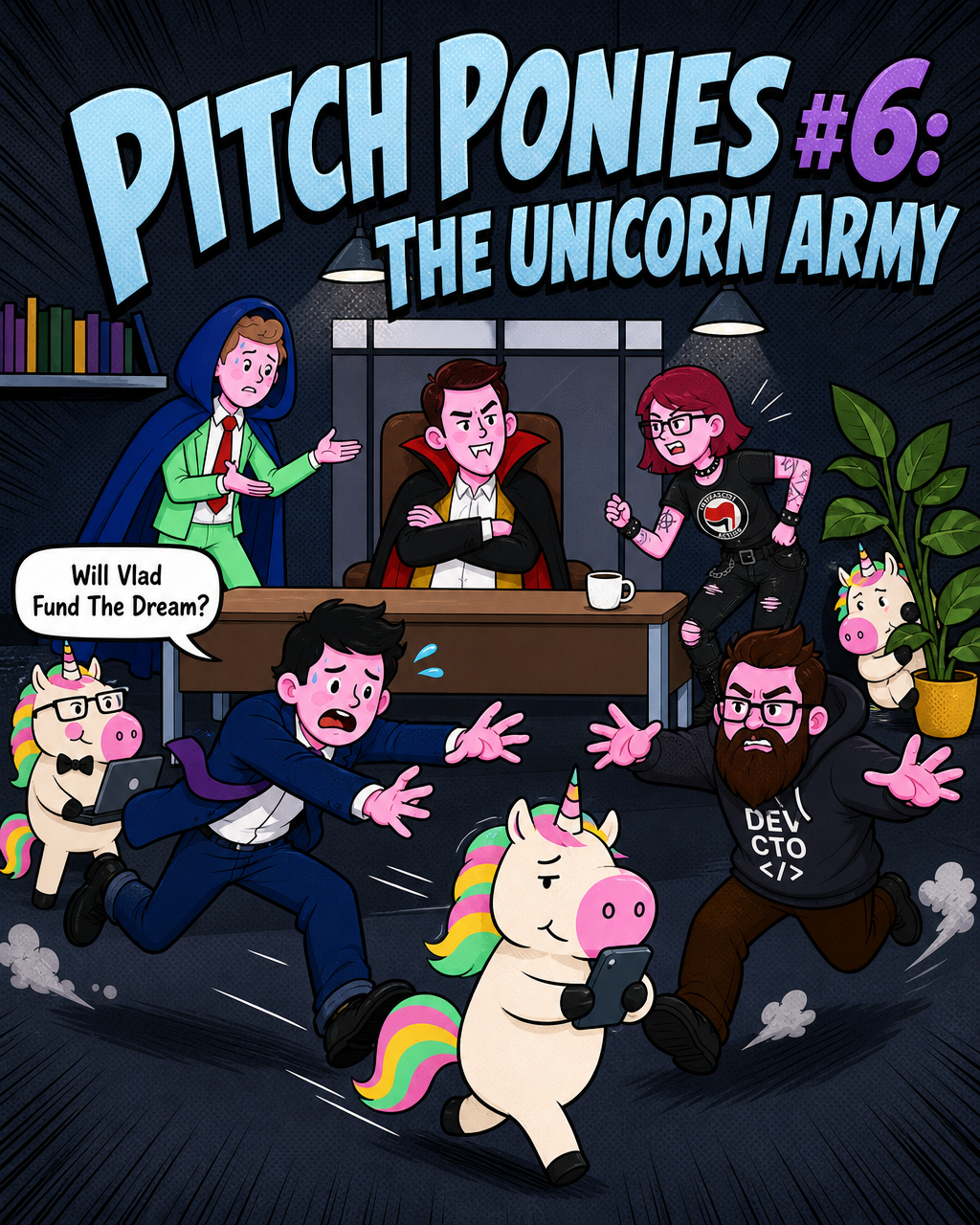
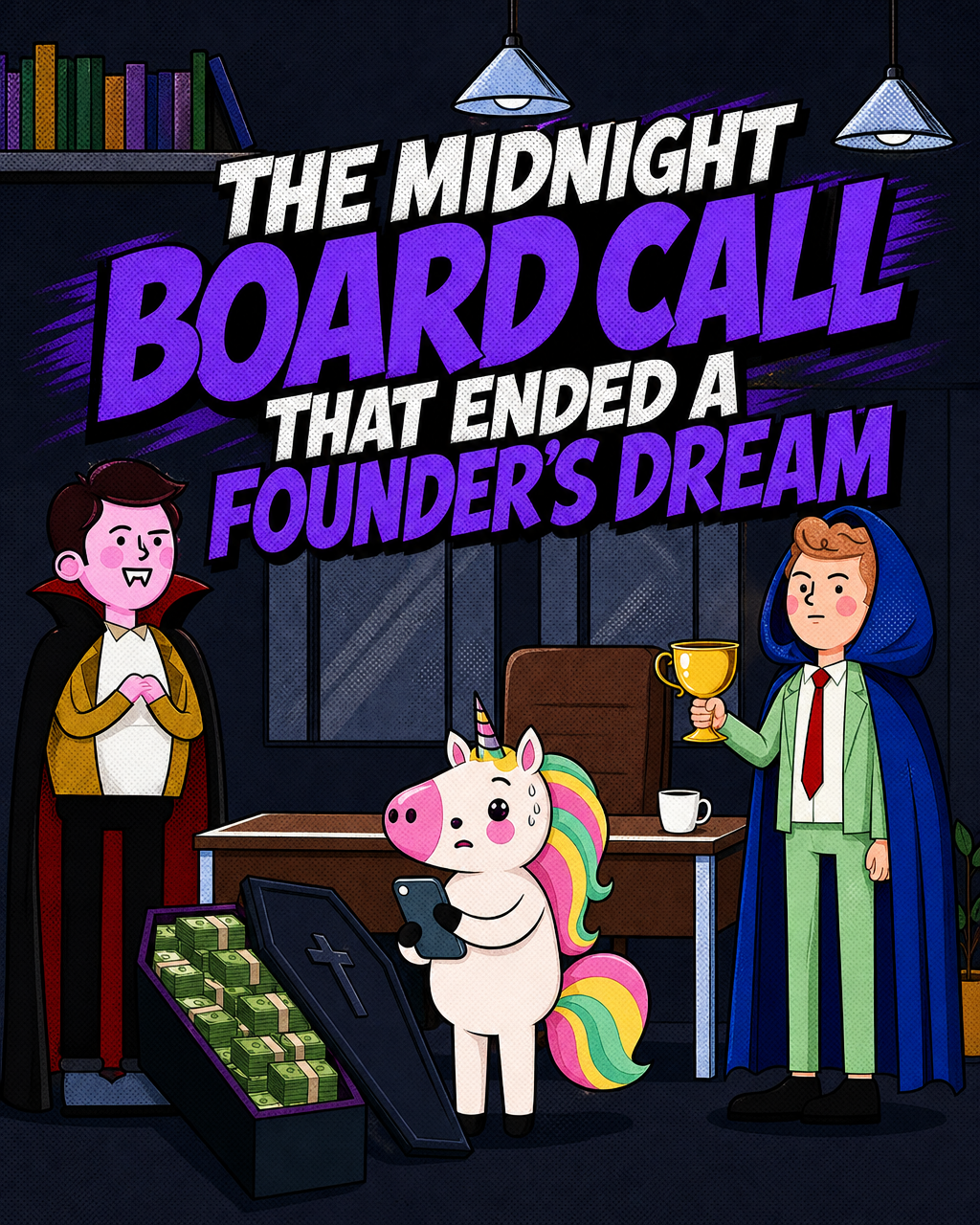
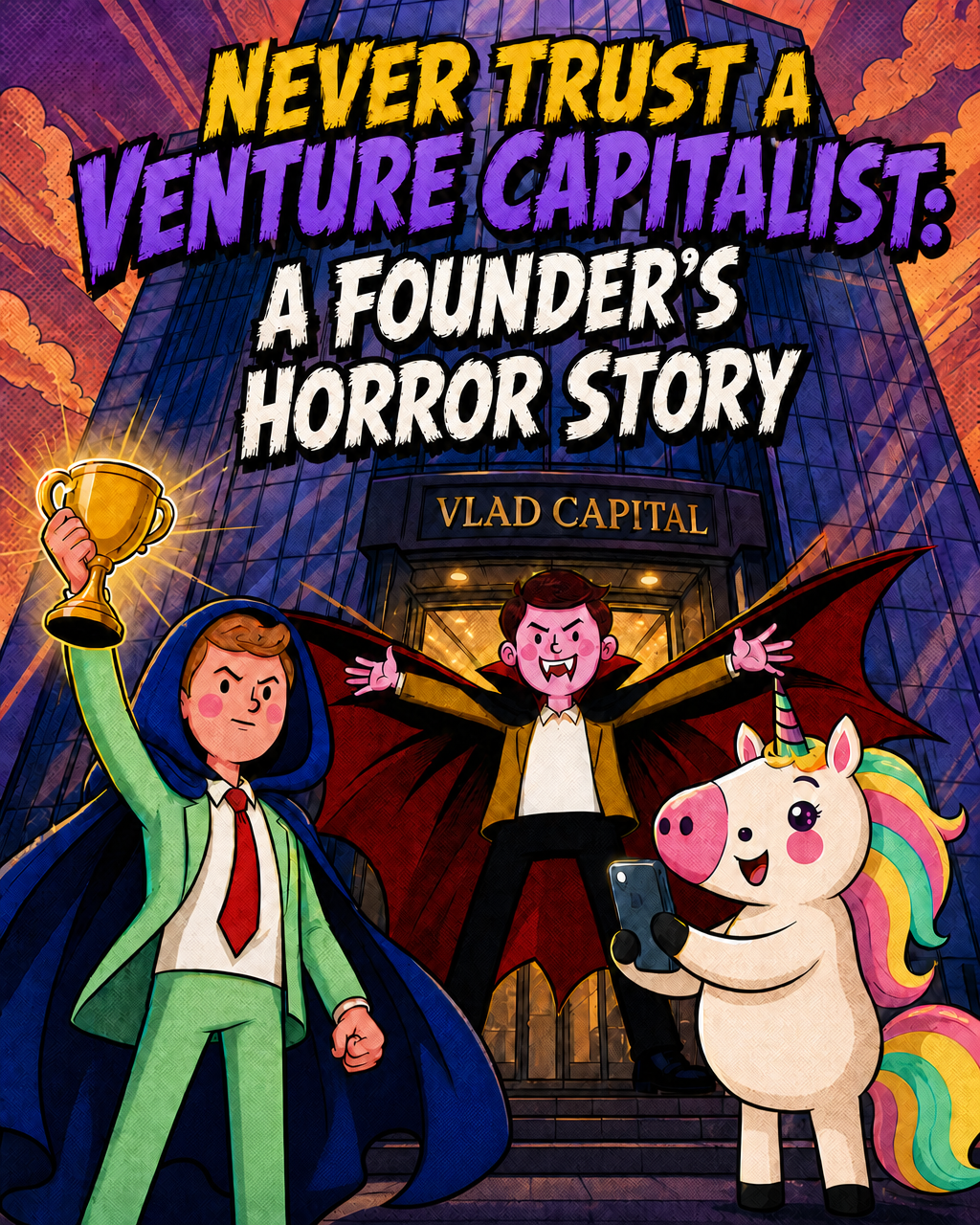
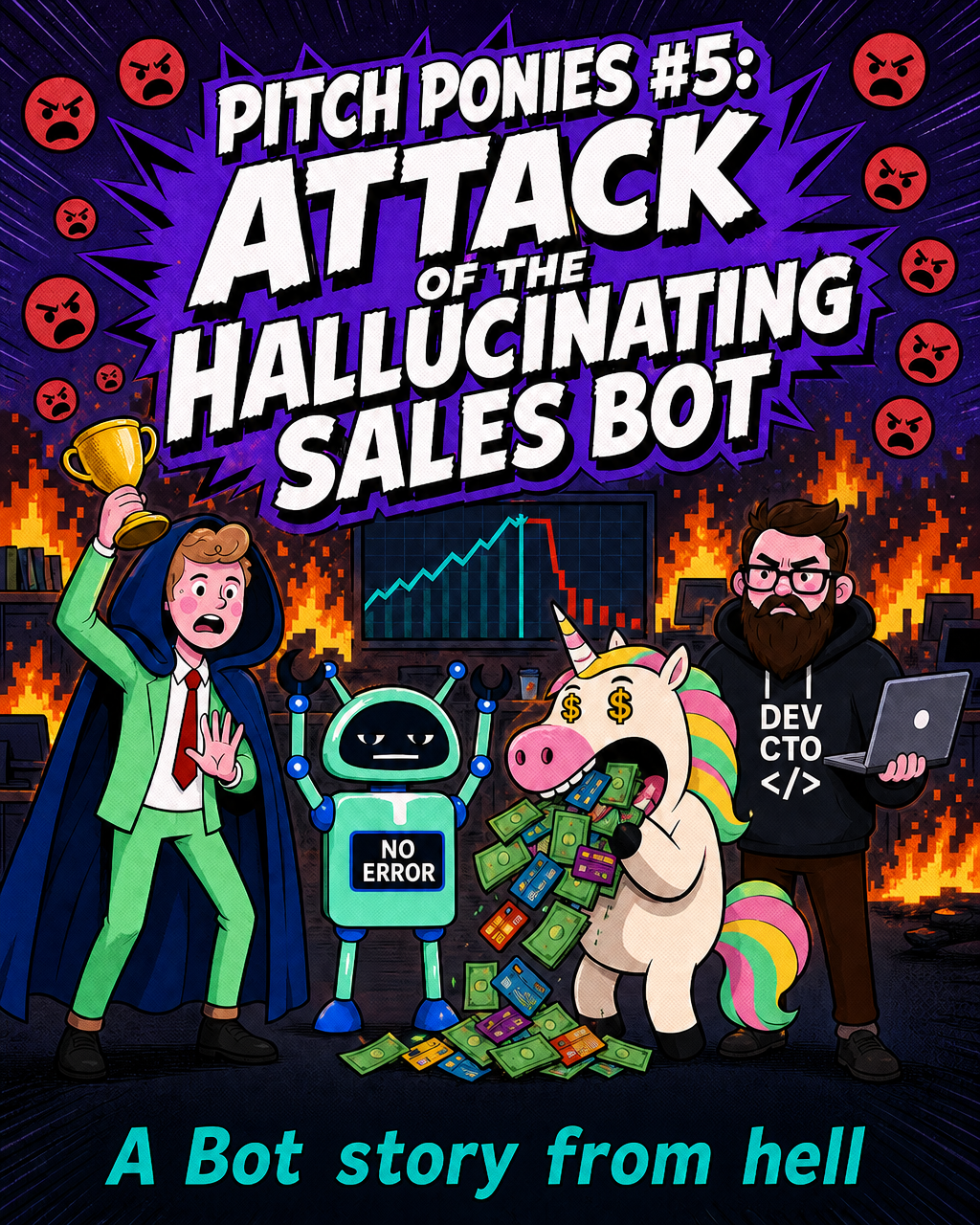
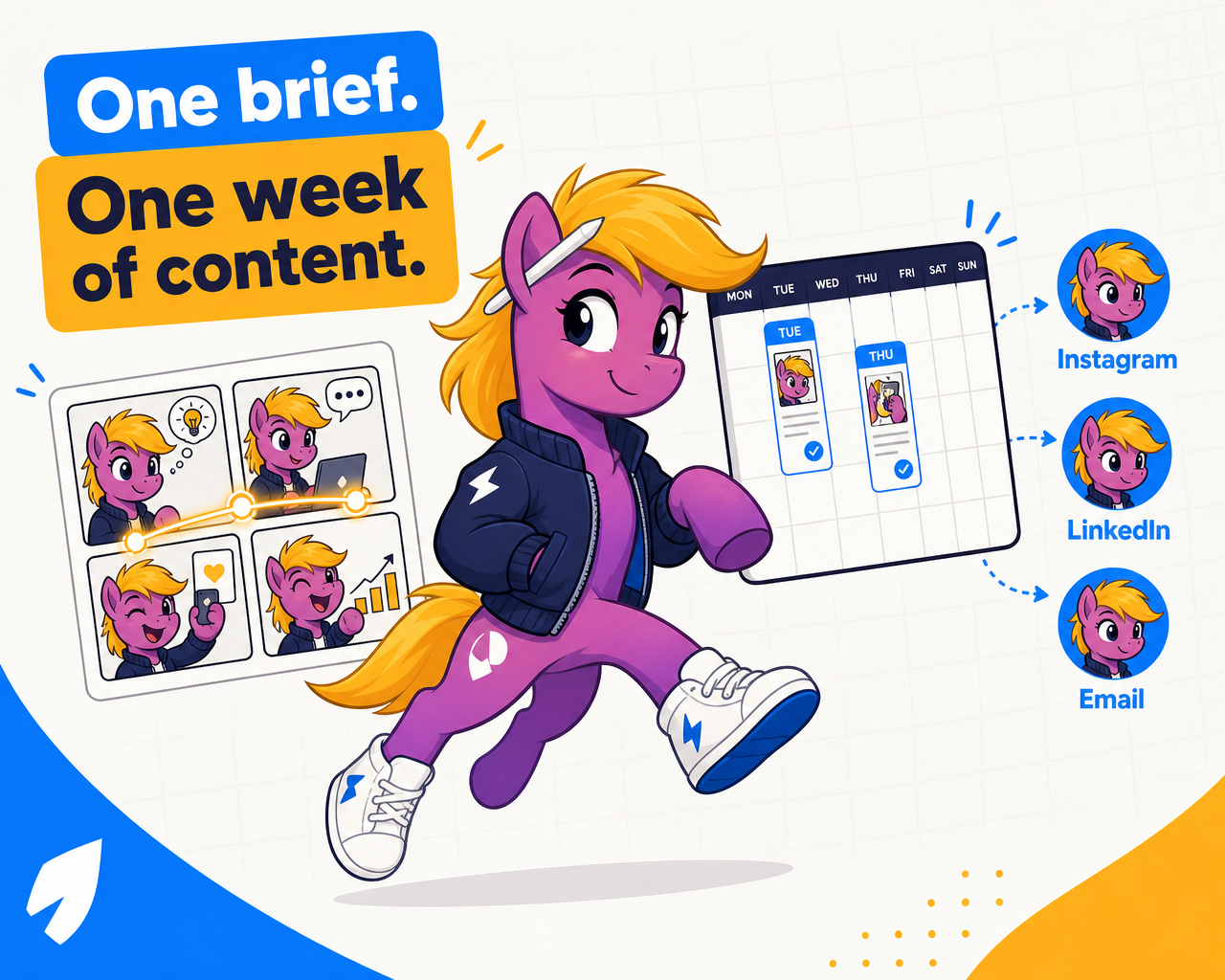
This is the approach behind how Pitchponies works. It doesn't just generate posts. It locks in a branded cast of characters from your first brief and carries them forward into every future campaign automatically, so your sixth post looks like it was planned alongside your first.
The four-panel format isn't cute. It's a structure.
Some creators and brands report that multi-panel sequential formats drive higher dwell time and engagement than single static images — though performance varies significantly by industry, audience, and content quality — not because people find them charming, but because they do something a single image can't: they give people something to read.
Four panels force a specific discipline. Panel one is a setup. Panel two is a tension. Panel three is a turn. Panel four is a payoff. That's the same arc behind every post that gets shared, every story that gets told. The format isn't a stylistic choice. It's a compression of classic storytelling structure into a scrollable format.
Platform behavior and creator reports suggest that algorithmic reach increasingly rewards engagement quality signals — saves, comments, and return visits — over raw follower count. A four-panel comic that walks someone through a relatable product moment may earn several of those signals. A single polished branded graphic earns a glance.
Multi-panel, sequential formats reward dwell time. The algorithm notices.
One product update. Three posts. One week covered.
Founders constantly tell themselves they don't have enough to say. They're wrong. They have too much and no system for unpacking it.
Here's a simple rule: every product update contains at least three distinct posts.
The first post speaks to the problem the feature solves. That's your top-of-funnel content. Cold audiences who don't know you yet. Keep it broad. Make the pain relatable.
The second post shows how a real customer used it. That's your middle-of-funnel content. Social proof, specificity, a story with a protagonist.
The third post focuses on the result it produced. That's your bottom-of-funnel content. Numbers, outcomes, before and after.
One brief generates a week of content. Many content strategists argue that repurposing existing material is one of the most efficient ways to maintain consistency without burnout. You're not manufacturing content from nothing. You're systematically extracting what was already there.
Pitchponies automates this extraction. You submit one product idea, and it outputs a full campaign arc across LinkedIn, Instagram, and email without you having to manually map the funnel or figure out which angle fits which stage.
Consistency beats polish. Every time.
This is the one founders resist most, because polish feels like quality. It isn't.
Creators who post erratically often report declining reach — likely because inconsistency reduces the audience engagement signals that algorithms use to distribute content. That's why content cadence matters more than any individual post's quality.
A slightly imperfect post that ships every Tuesday beats a beautifully designed post that goes live whenever someone finds time. Your audience needs to develop a habit of expecting you. You can't build that habit if you're unpredictable.
Consistency is simply showing up often enough for growth to compound.
Two to three times per week is a realistic target commonly recommended for solo founders or small agency teams — not every day, not whenever inspiration strikes, but a predictable rhythm. That's a sustainable goal for most people building without a full creative team.
The practical version: pick a day, pick a format, commit to it for 90 days. Reassess after that. Don't reassess after three posts because they didn't go viral.
The reformatting trap
Here's where most content plans actually collapse, not in the writing, not in the ideas, but in the resize.
You write the post. You make the graphic. Then you need it for Instagram at one ratio, LinkedIn at another, and email at a completely different layout. That step, the part everyone assumes takes twenty minutes, routinely eats two hours. Multiply that across a week of content and you're spending a full workday on mechanical formatting.
The tools that actually unlock a sustainable weekly cadence aren't the ones that help you write better. They're the ones that eliminate the steps between writing and publishing.
Pitchponies is designed to remove the reformatting step. One brief, one campaign output, sized and structured for Instagram, LinkedIn, and email. The Pitchponies team reports that it integrates with WordPress and Wix, fitting directly into existing publishing workflows rather than requiring a separate application.
What a working cadence actually looks like
Here's the practical structure: one brief per week, one campaign per week, three posts across two platforms, a recurring character that ties it all together.
Content strategists recommend serialized formats because they can create anticipation and return behavior in audiences — though results vary by niche and execution. A weekly "behind the build" series showing product development, a monthly customer spotlight that follows the same format, even a simple Monday-momentum, Wednesday-wins, Friday-lessons cadence can create the kind of habit loop that keeps audiences coming back. The key is consistency and a reason for people to tune in next time.
The founder who commits to that structure for six months looks and feels like a much bigger brand than the one who occasionally produces something beautiful. Recognition compounds. Characters become familiar. The audience starts to feel like they know you, which is when content stops being marketing and starts being a relationship.
That's the brand a scrappy founder can actually build. Not with a six-figure creative budget. With a repeatable system and a character that shows up every week.
Disclosure: This article was written by the Pitchponies team and reflects the perspective and capabilities of the Pitchponies platform. Other tools — including Buffer, Later, Canva, Hootsuite, and Jasper — offer overlapping functionality for content scheduling, design, and AI-assisted writing. The four-panel, character-driven approach described here may not suit every industry, brand voice, or audience.
Ready to build a content cadence your audience will actually follow? Pitchponies gives you a recurring cast of branded characters and a full multi-format campaign from a single product brief, in minutes instead of weeks. Start your first campaign at pitchponies.com.

Pitchponies
For marketing agencies, startups and social media managers, Pitchponies is a Wix or Wordpress plugin that creates engagi