The Unicorn Army: How Lean Founders Now Fight Like Enterprises

There's a story we told ourselves for a long time about how great companies get built. It went something like this: one person, one brilliant idea, one garage. The lone genius, working against the odds, eventually conquering the market through sheer force of will and intelligence.
That story was always mostly myth. And now, in mid-2026, it's been replaced by something stranger, leaner, and considerably more dangerous to anyone still playing the old game.
Meet the unicorn army.
Not a Valuation. A Mode of Operating.
The word "unicorn" used to mean one thing: a startup worth a billion dollars or more. Rare, celebrated, slightly unreal. A milestone most founders would never reach.
That definition still exists. But something has shifted in what the word signals about how a company operates. Because the founders building outsized outcomes in 2026 aren't doing it by hiring faster or raising bigger. They're doing it by deploying smarter.
Midjourney was reported by several outlets in 2023 to have reached approximately $200 million in annual revenue with a notably small team — figures the company, as a private entity, has never formally confirmed. Those specific numbers may well have changed since. Pieter Levels has publicly shared revenue milestones on social media, at times citing figures in the multi-million-dollar range while operating with few or no full-time employees — though the precise current figures and whether contractors are counted vary depending on the source and date. These cases are illustrative rather than definitive, but the pattern they point to is real: a growing cohort of very small teams producing revenue that would once have required organizations many times their size. The trendline has been moving in this direction for over a decade, and in 2026 the revenue numbers from very small teams are becoming harder to dismiss as outliers.
Something structural changed in the economics of building companies. Building got cheap. Depending on tooling choices and usage, a basic AI execution stack covering coding, content, design, sales, and support can run somewhere in the low hundreds of dollars per month — a fraction of what even a small human team covering the same functions would cost. The precise gap varies widely by context, but the directional shift is significant and has accelerated since the early 2020s.
But here's the thing about unicorn army thinking that most of the hype misses entirely: it isn't about going solo. It's about going coordinated.
The Army Is Lean. The Output Is Not.
A small team operating with the right AI systems can produce output that would have required a much larger department just a few years ago. The ratio varies by domain and is difficult to measure precisely, but the structural shift is real: the old coupling between headcount and output capacity is loosening.
The old model of scaling output meant scaling headcount. More features meant more engineers. More pipeline meant more SDRs. More content meant more writers. Every new function added coordination overhead, management layers, onboarding time, and equity dilution. The curve was predictable: output grew, but slower than cost.
The new model decouples those two things. When you can deploy specialized AI agents for distinct functions — a research agent that scans markets, a build agent that writes and ships code, a sell agent that produces content and runs outbound — the cost of adding capacity doesn't grow proportionally with the output. The curve bends in a different direction.
This is what the unicorn army actually is: not a single genius with a laptop, and not a hundred-person company masquerading as lean. It's a small, coordinated force operating with the output density of something much larger. The army is lean. The battlefield coverage is not.
But coordination at this level requires something most people underestimate. It requires role clarity so sharp that no two soldiers in the army are stepping on the same ground.
Distinct Roles, Interlocking Missions
The magic of a well-built unicorn army isn't the individual capabilities. It's the architecture of how those capabilities connect.
Think about what a venture actually requires from zero to revenue. Someone has to scan the market and identify where the real demand is — not where founders think it is, but where the signals point. Someone has to take that validated opportunity and build something real against it, something that ships, something customers can actually use. Someone has to fill the pipeline, generate the content, run the outreach, convert the attention into revenue. And someone, critically, has to close the loop: feeding what the sell function learns back into what the discover function goes looking for next.
Those are four distinct roles. Discover. Build. Sell. Loop.
When they're executed by different people or different systems with different tooling and no shared data, you get the fragmented, expensive, slow-moving startup that most early founders know too well. The market research team that doesn't talk to the product team. The dev agency that builds but doesn't sell. The marketing hire who creates content with no idea what the discovery data says customers actually want.
When those roles interlock — when the signal from selling feeds directly into what discovery goes looking for next, when the discovery insights sharpen the build spec before a line of code is written, when the build outputs become the raw material for the sell campaign — something different happens. The flywheel turns. Each cycle gets smarter than the last. The army compounds.
This is why capable founders in 2026 aren't asking "how do I hire someone to do this?" They're asking "how do I connect these roles so the output of one feeds the input of the next?" The inter-operation is the moat. No point solution can replicate it.
Rare Talent, Rare Leverage, Rare Timing
Here's what makes a unicorn army genuinely hard to assemble, even in a world where the tools exist.
It requires three things converging at once.
The first is rare talent — not necessarily genius-level, but the specific combination of strategic judgment and systems thinking that lets a founder direct agents rather than just operate them. The skill that matters in 2026 isn't prompt engineering. It's what some practitioners are calling context engineering: the ability to build the information architecture that makes AI agents reliable across complex, multi-step workflows. That's a different and harder skill than most people expect.
The second is rare leverage. The tools exist today to run a full venture — discovery, build, and sales execution — at a fraction of what a human team would cost. But tools alone aren't leverage. Leverage comes from connecting them into a closed loop where each output sharpens the next input. Founders who use AI as a writing tool are not building leverage. Founders who architect AI systems where discover feeds build feeds sell feeds discover are building something that compounds.
The third is rare timing. And this one is the most underappreciated of the three.
Because the window where a small, AI-native force can outmaneuver a larger, slower-moving organization doesn't stay open forever. Many large enterprises deploy AI primarily to reduce operational friction in existing processes, while small, AI-native teams can more readily use it as a generative force multiplier — though this distinction is not categorical, and some enterprises are also achieving genuine generative gains. The advantage for small teams may lie more in speed of iteration than in any fundamental difference in how AI is applied. But as enterprise AI adoption matures, even that asymmetry is likely to narrow. The founders who build AI-native operating models now, while the speed advantage remains wide, may find themselves meaningfully ahead when the market catches up — though how durable that lead proves to be is an open question as AI capabilities continue to commoditize.
Talent, leverage, and timing. When all three converge, something most markets have never seen before becomes possible.
The Hardest Part Isn't the Army
Here is the thing most people get wrong when they think about building this kind of force.
They think the hard part is assembling the capability. Finding the right agents. Wiring up the right tools. Building the right stack. Getting everything to run.
That stuff is genuinely difficult. But it's not the hardest part.
The hardest part is knowing which battlefield you're actually on before you commit your forces.
Because a unicorn army deployed against the wrong problem is still an army moving in the wrong direction. Faster execution of a bad thesis is just a faster way to reach a dead end. The founder who ships a production-ready product in four weeks and fills a pipeline in the next four weeks has done something impressive. But if the underlying market signal was weak, if the opportunity was never really there, none of the execution velocity matters.
This is why the discover function is the most strategically important role in the whole army, and also the most frequently skipped. Founders are impatient. They want to build. They want to move. The idea feels real, so they treat the validation phase as a box to tick rather than a genuine intelligence operation.
But reading the battlefield correctly before you commit is what separates the unicorn armies that win from the ones that move brilliantly in the wrong direction. TAM, competitor density, demand signals, hiring trends, where the market is actually going versus where it appears to be going. That intelligence doesn't come from gut feel. It comes from systematic scanning, from data that compounds, from a discovery function that runs continuously and feeds everything downstream.
The army metaphor breaks down a little here, because in military terms, intelligence and execution are often separate functions. In the unicorn army, they feed each other in a continuous loop. The sell data tells you where customers are actually engaging. The build data tells you what's actually shipping. And all of it feeds back into discovery, sharpening what you go looking for next.
That closed loop is the strategic edge. And it only works if you take the battlefield intelligence as seriously as the execution.
What the Lone Genius Never Had
The myth of the lone genius was always a story about individual brilliance overcoming structural disadvantage. One person against the market. One mind against complexity.
It was a romantic story. It was also, mostly, a story about survivorship bias. The lone genius we celebrated was the one who happened to pick the right battlefield, at the right time, with the right product. For every celebrated soloist, there were hundreds who moved brilliantly and still lost because the timing was wrong or the market signal was misread.
The unicorn army isn't a story about individual brilliance. It's a story about coordinated intelligence. A small force with distinct roles, interlocking missions, shared data, and a feedback loop that gets smarter every cycle.
That's something the lone genius never had. And it's something a large, slowly-moving enterprise team struggles to replicate, because the coordination overhead of a hundred people moving in the same direction is its own kind of drag.
The lean, coordinated force — rare talent directing rare leverage at a rare window of timing — occupies a position most markets have never had to defend against.
That's what makes it dangerous. That's what makes it a unicorn army.
And the founders who understand this aren't the ones asking "how do I hire the next person?" They're the ones asking: "how do I close the loop?"
Supramono is built for exactly this operating model. Discover, Build, and Sell — three integrated engines, one closed loop, one platform. See how it works at supramono.com.
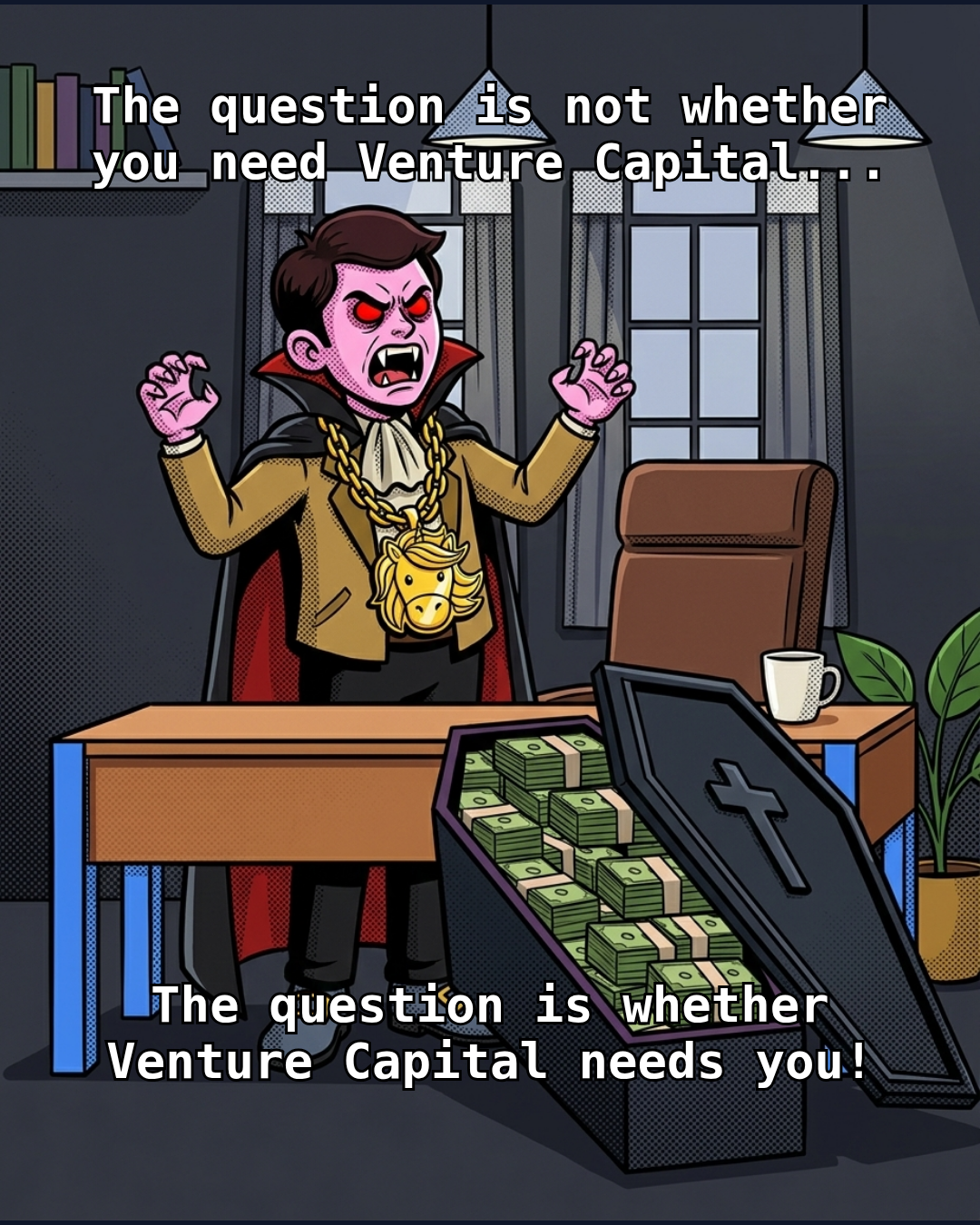
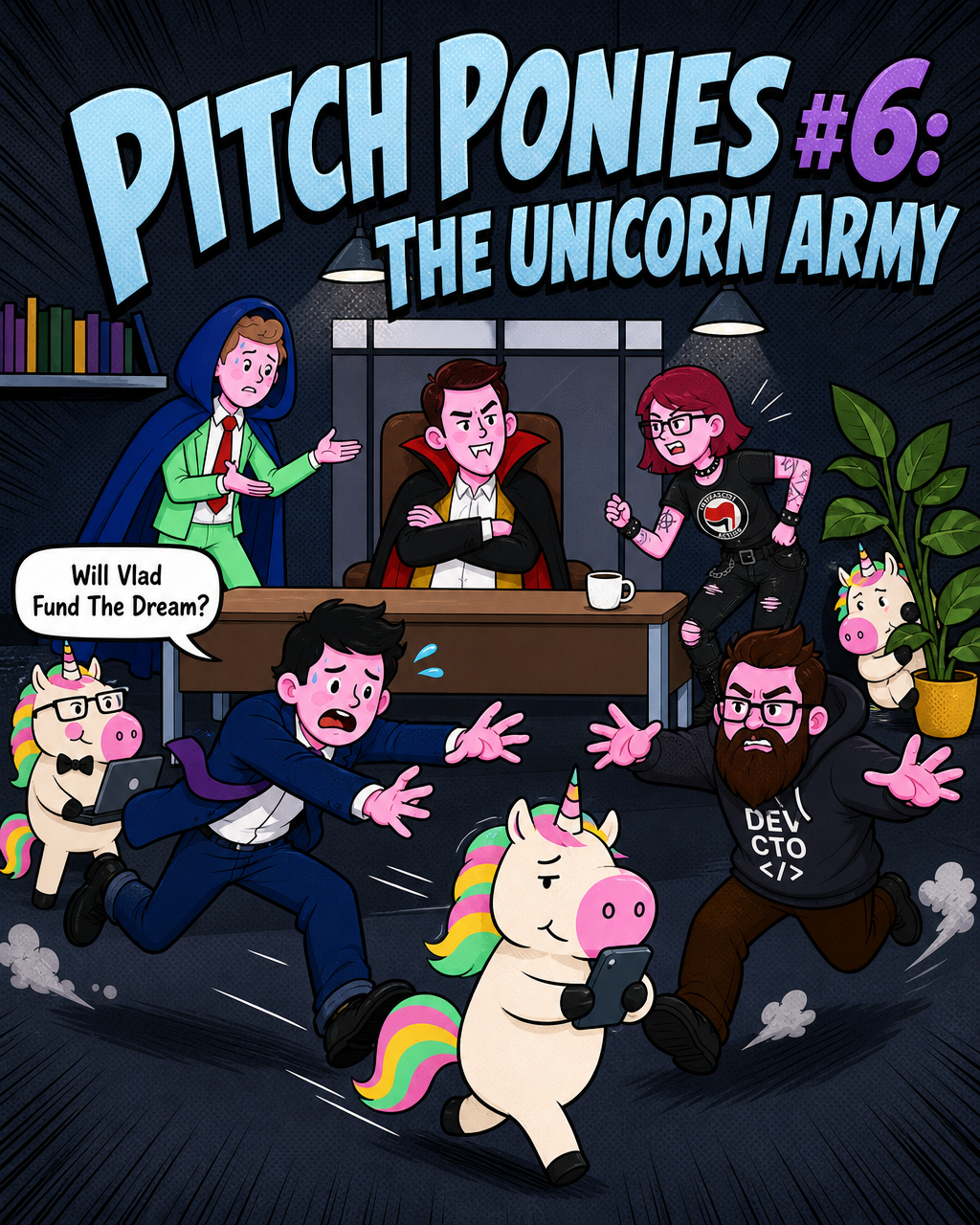
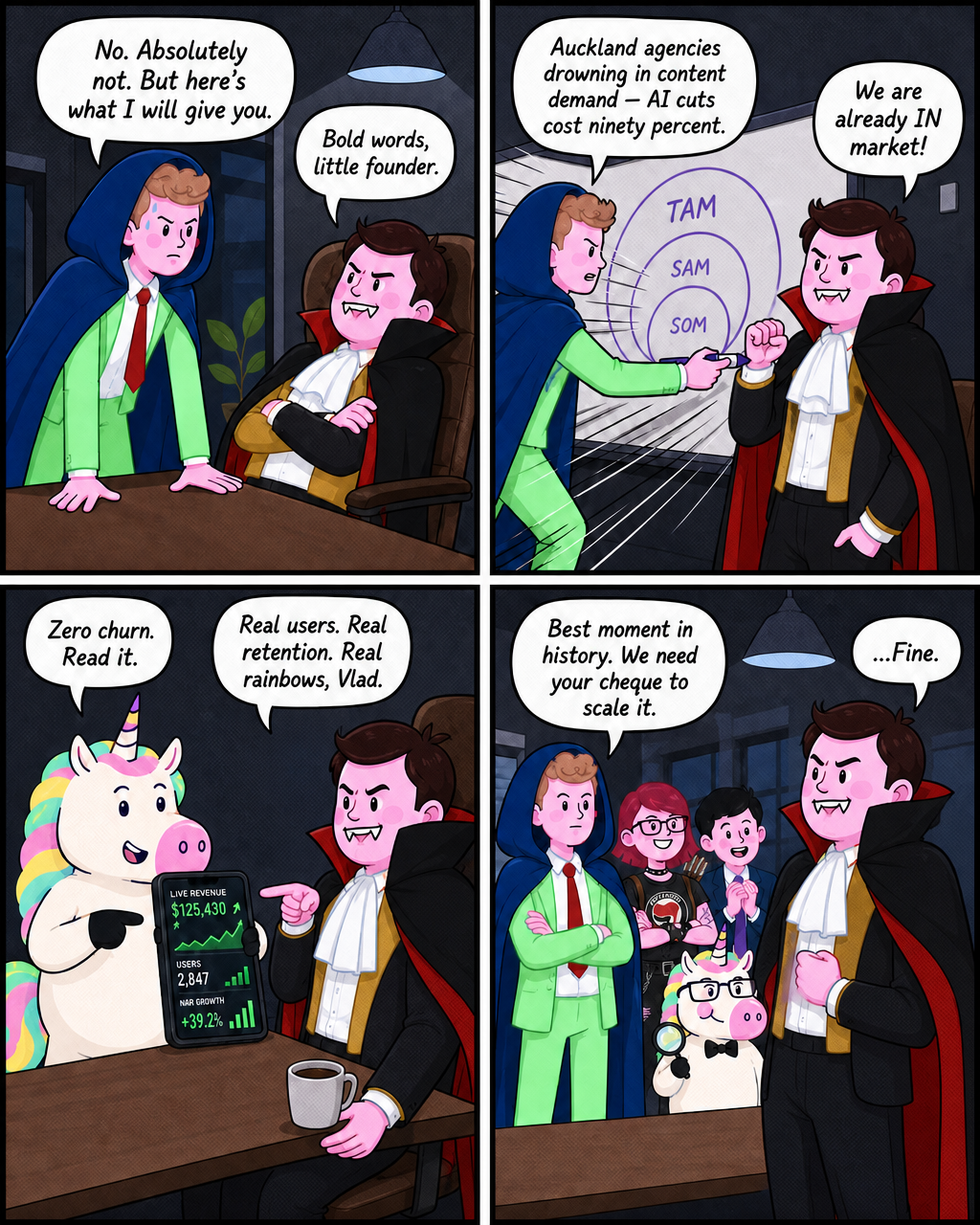
Will Vlad Fund The Dream?
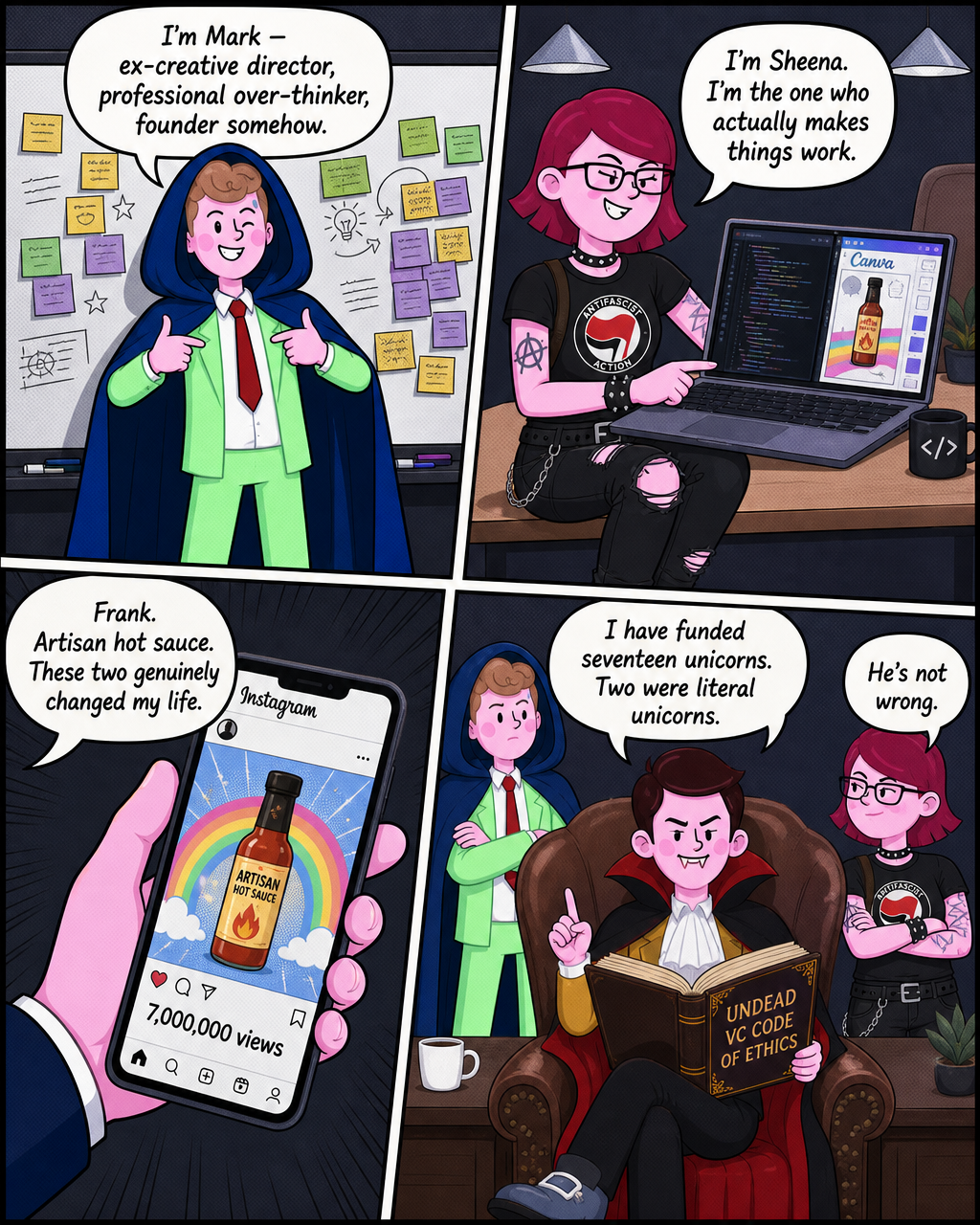
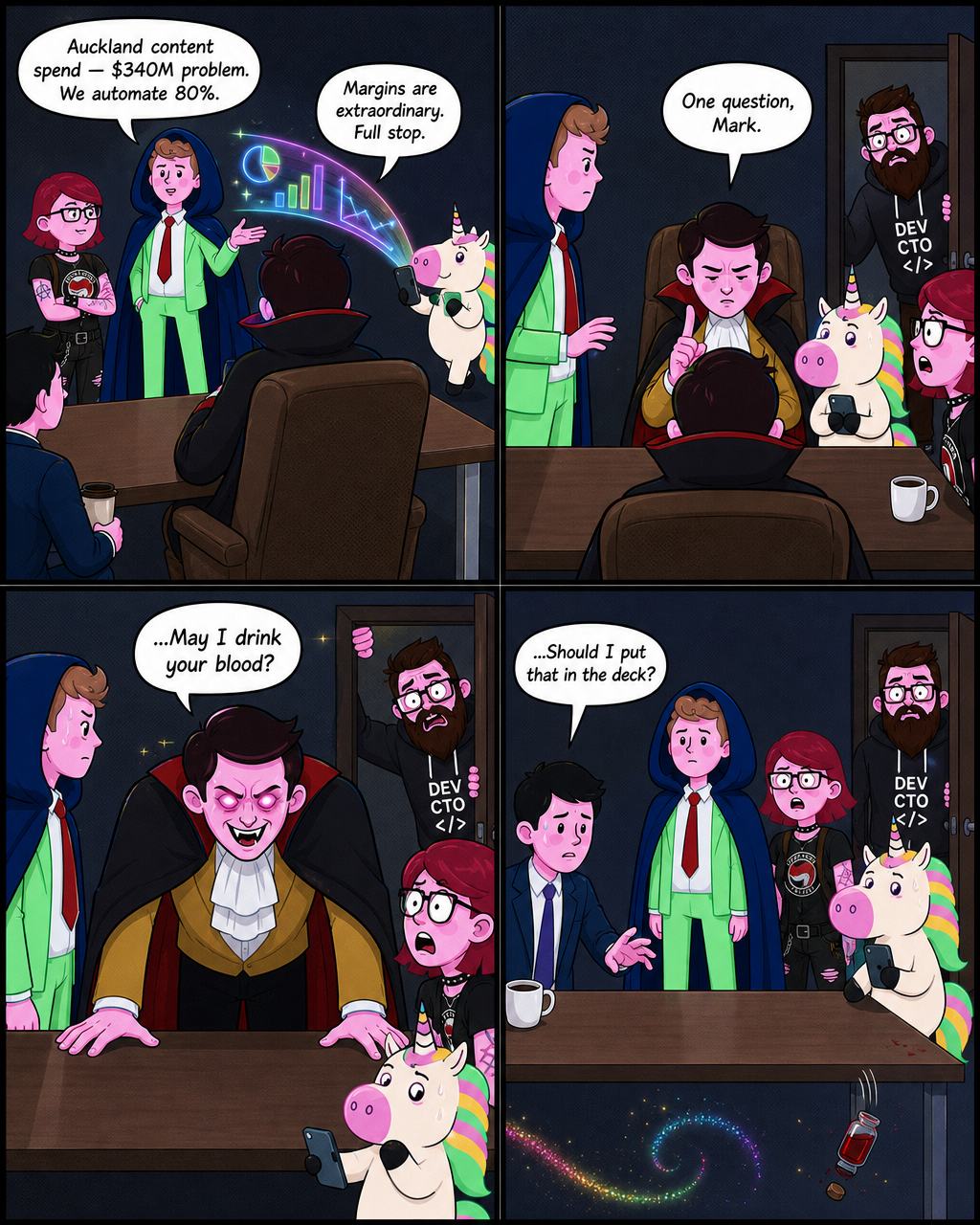
Vlad, a skeptical investor, faces a pitch from a tiny founding team asking whether a small crew can really compete at enterprise scale.
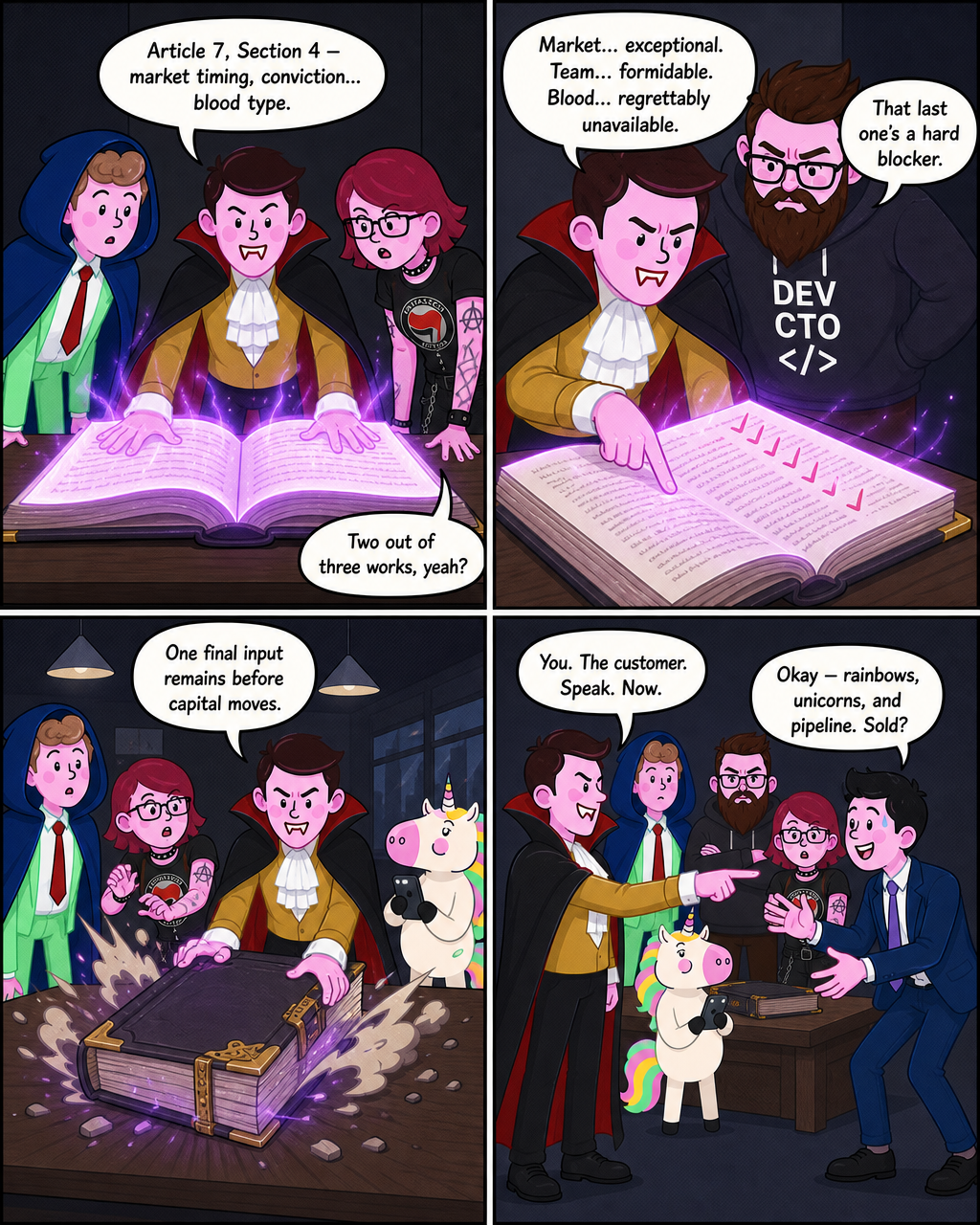
Meet The Whole Crew
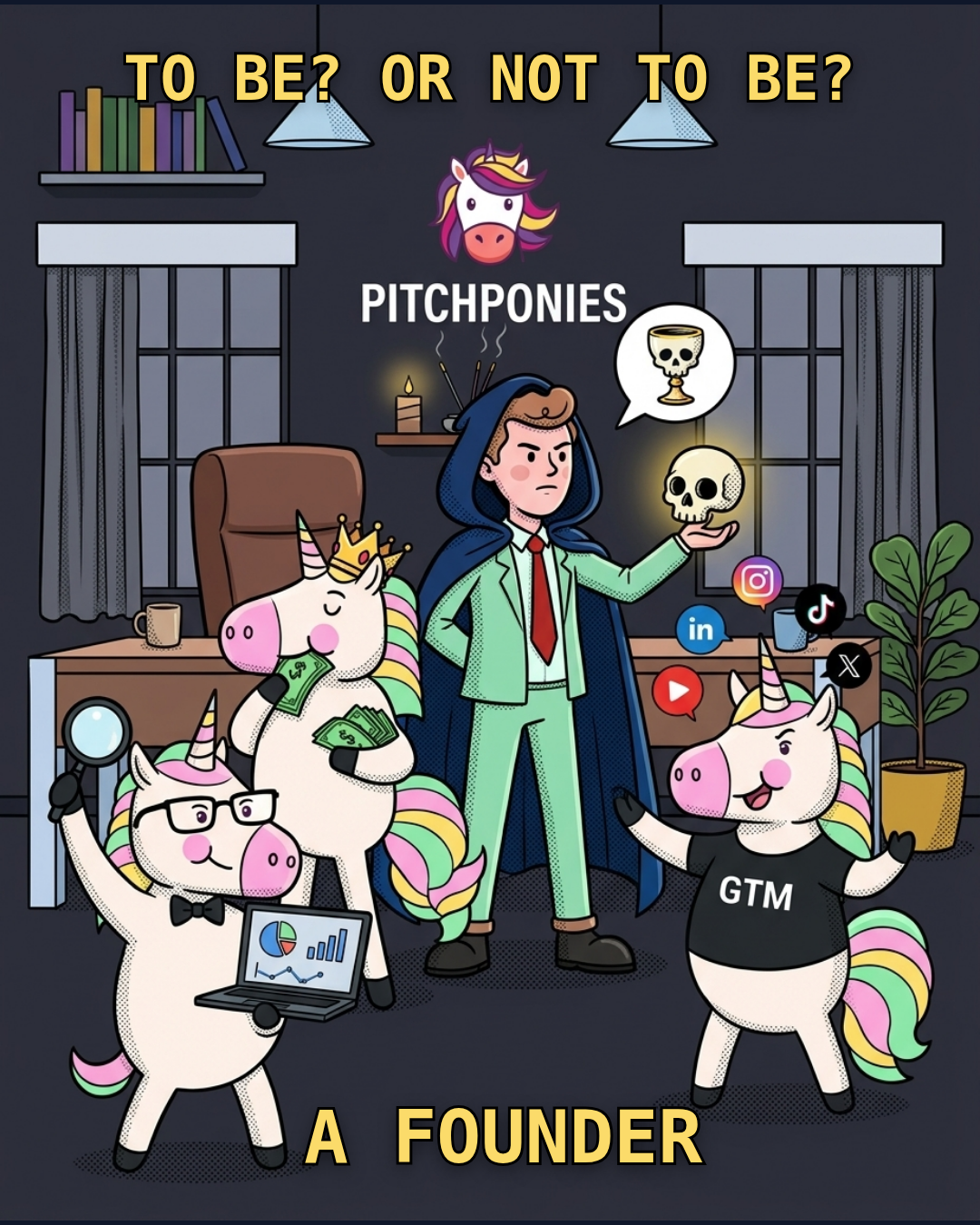
The founding team is introduced: a builder, a seller, and a storyteller — three roles that mirror the discover, build, and sell framework of the unicorn army.
Introducing Pitchponies
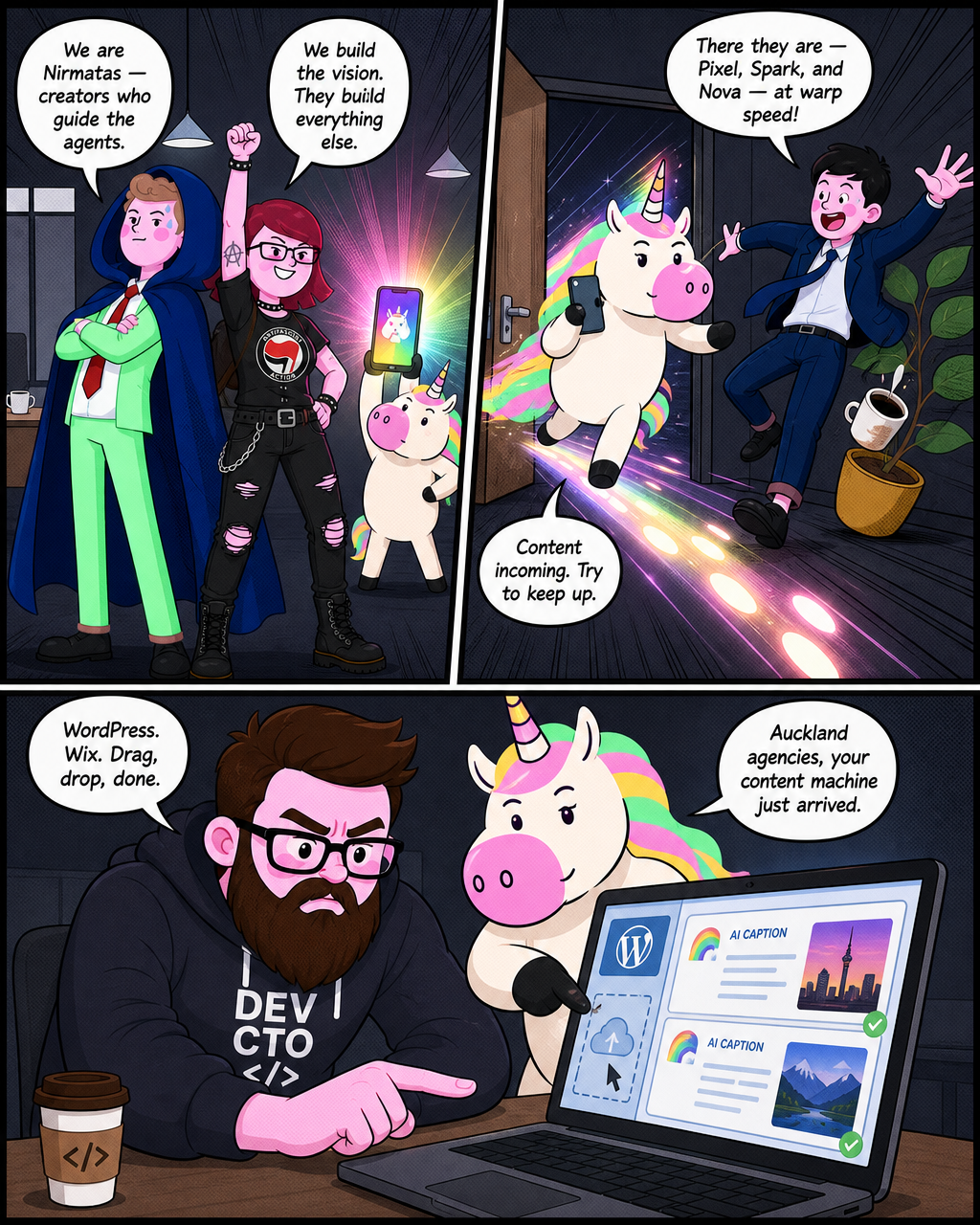
The team reveals Pitchponies, a content plugin for Wix and WordPress that gives lean founders a persistent brand character system for campaigns.
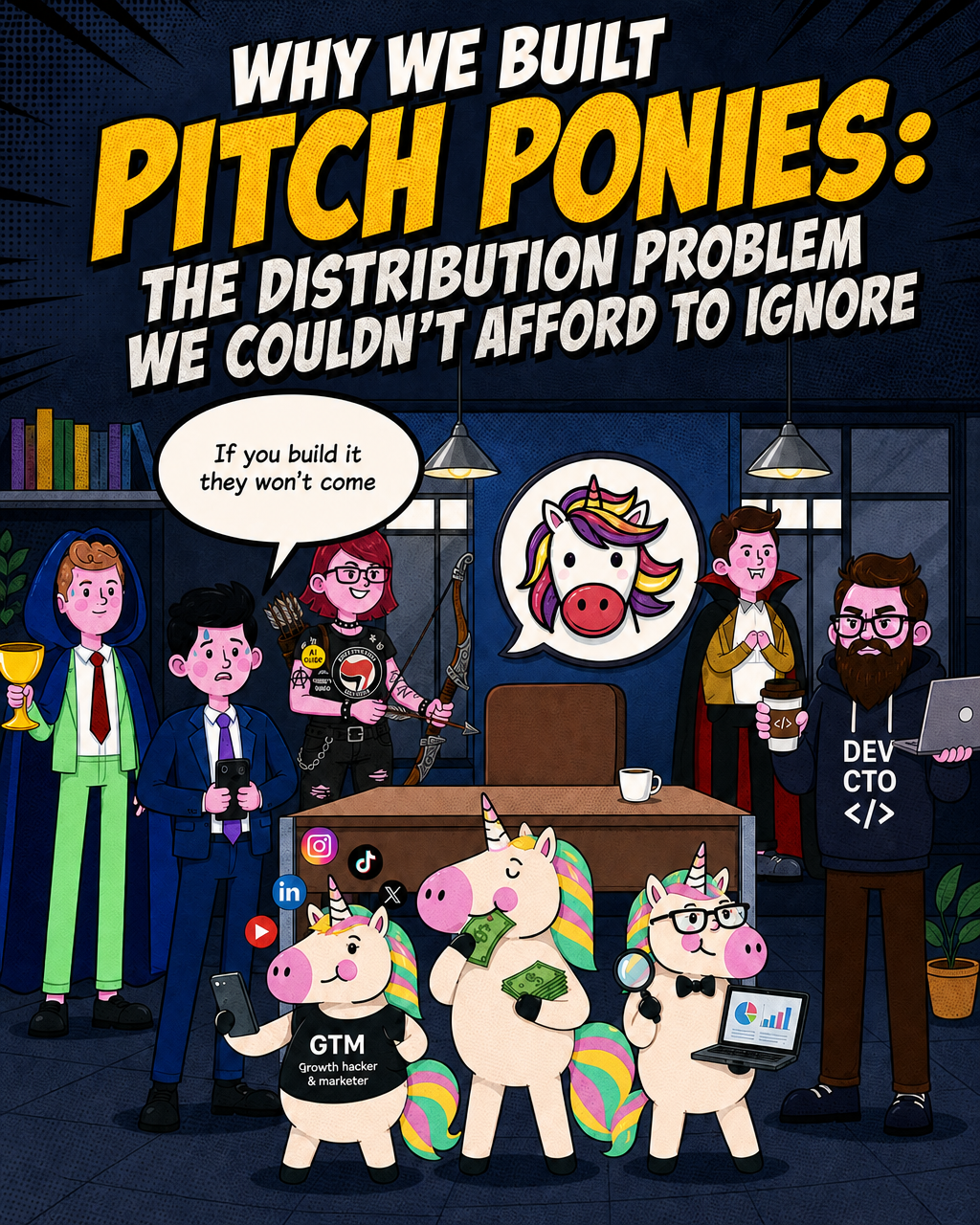
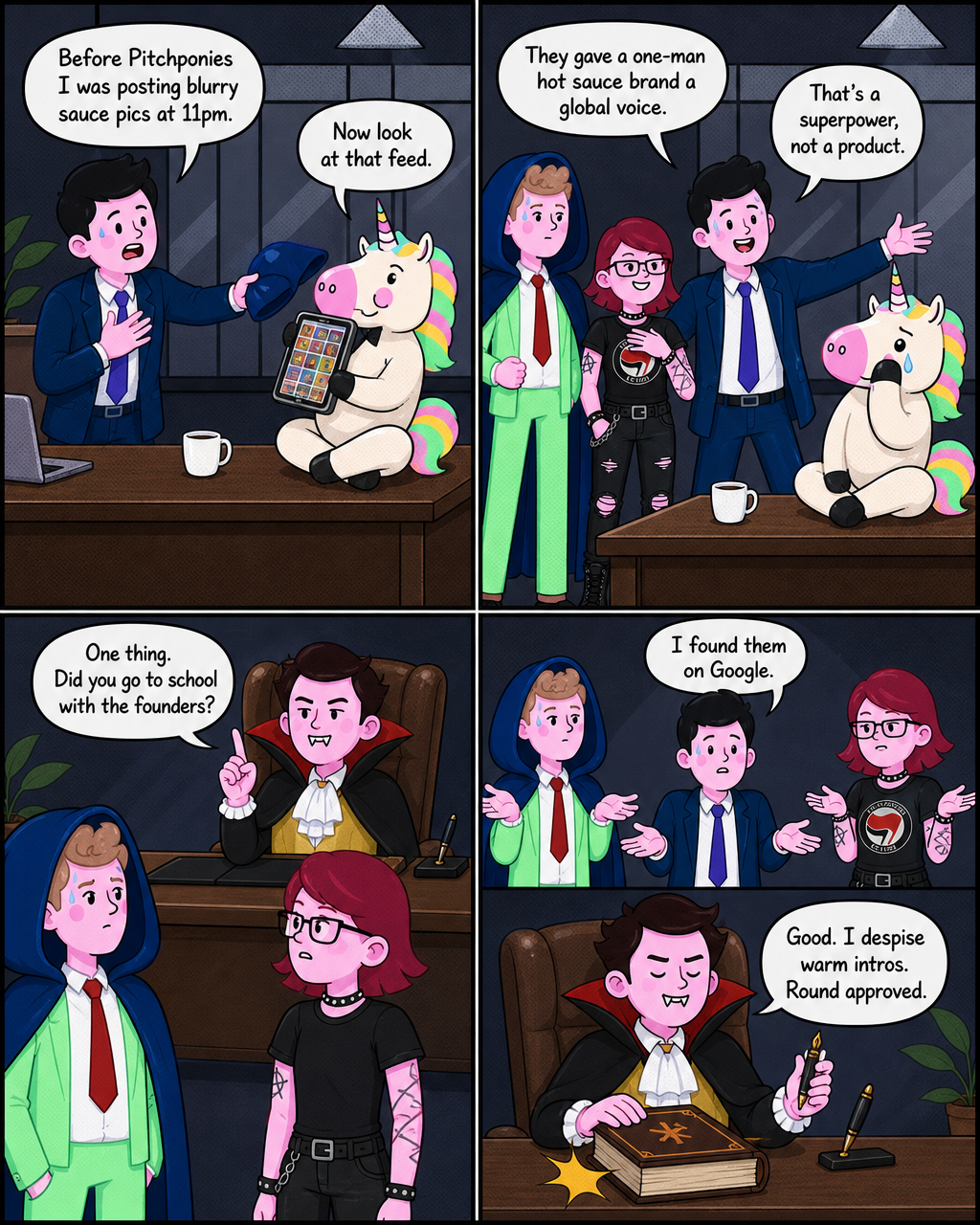
Why They Built It
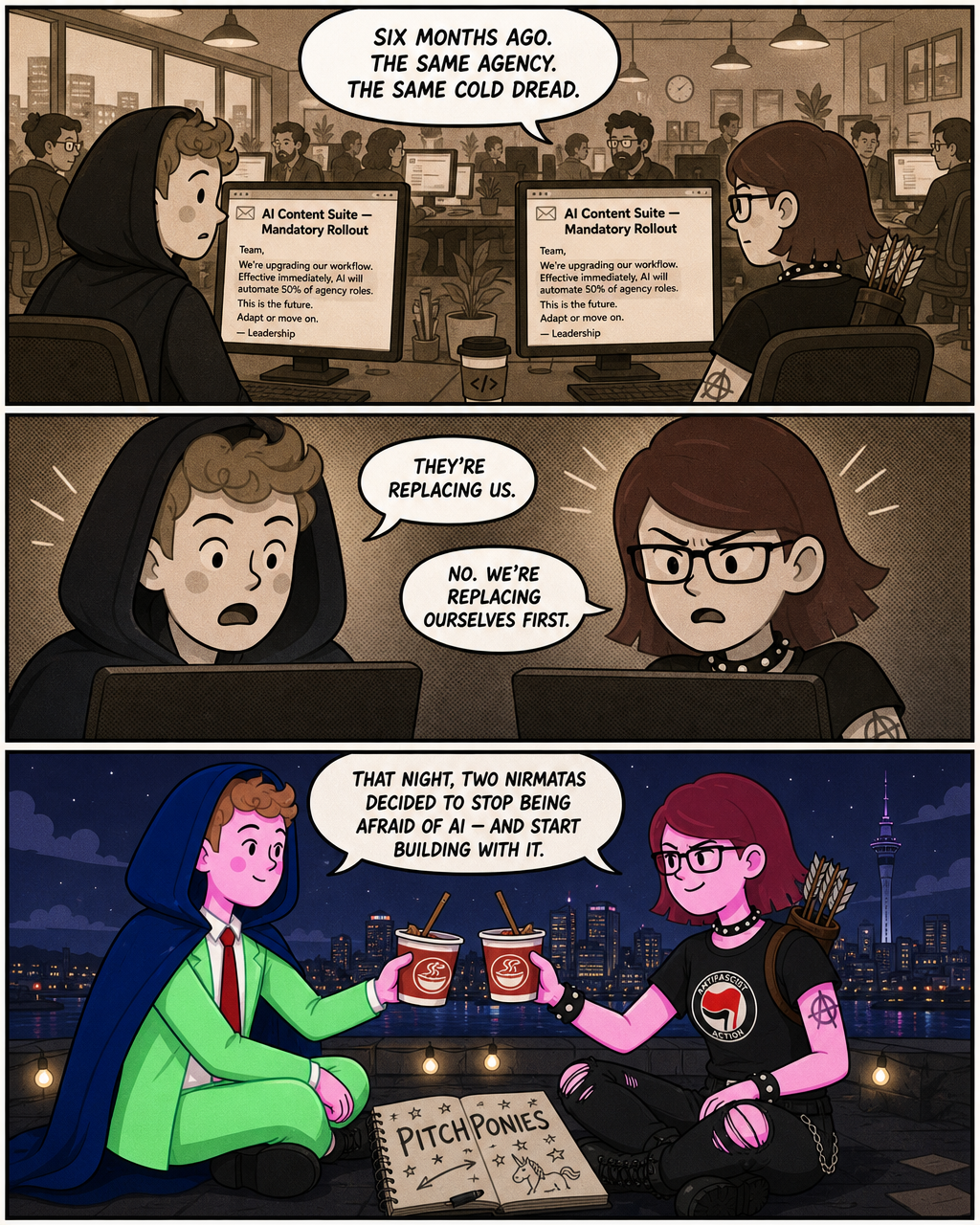
The founders explain the problem: small teams waste hours on inconsistent content that disappears into the feed, while funded competitors look polished by default.
Vlad Asks The Question
Vlad pushes back — how does a two-person team maintain brand consistency across Instagram, LinkedIn, and email without a design hire?
Mark's Power Move
Mark, the team's builder, demonstrates multi-panel comic generation with character locking — the same visual identity reproduced across every campaign automatically.
Vlad Consults The Code
Vlad digs into the plugin architecture, confirming that the character vault persists across both WordPress and Wix so brand assets never drift between platforms.
Frank Seals The Deal
Frank, the seller on the team, shows Vlad the pipeline: 25 beta users at $49 per month, with at least 15% requesting full campaign previews after seeing a single demo.
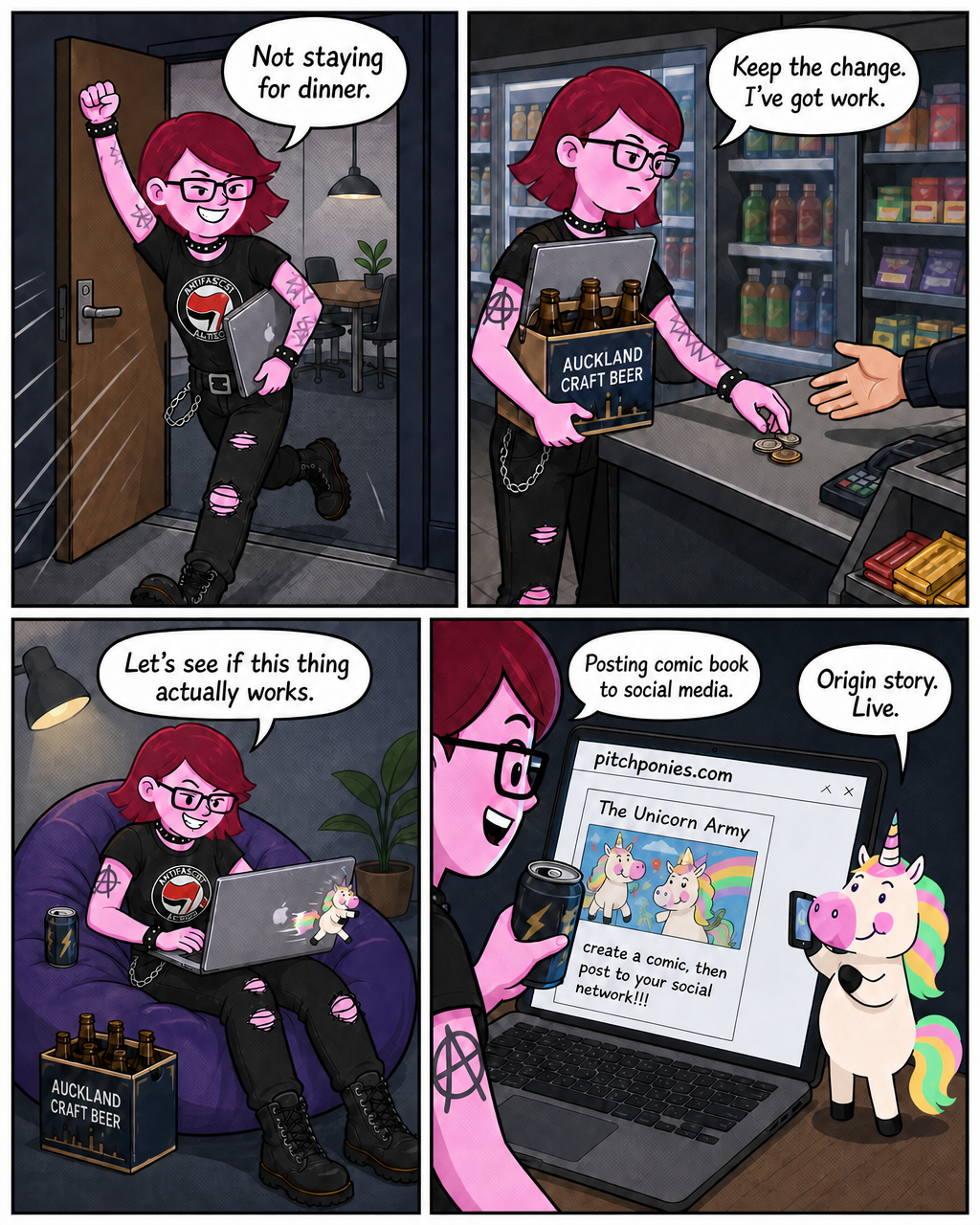
Sheena's Solo Mission
Sheena, a solo DTC founder in the story, uses Pitchponies without any design background to launch a consistent weekly comic campaign from her Wix store.
The Comic Goes Viral
Sheena's campaign gets shared organically, proving the unicorn army thesis: one founder with the right system can produce content that punches at enterprise scale.

Pitch Ponies
Your go-to-market function, from week one.
Your go-to-market function, from week one.
Learn more about Pitch Ponies and get started today.
Visit Pitch Ponies