Why We Built Pitch Ponies: The Distribution Problem We Couldn't Afford to Ignore
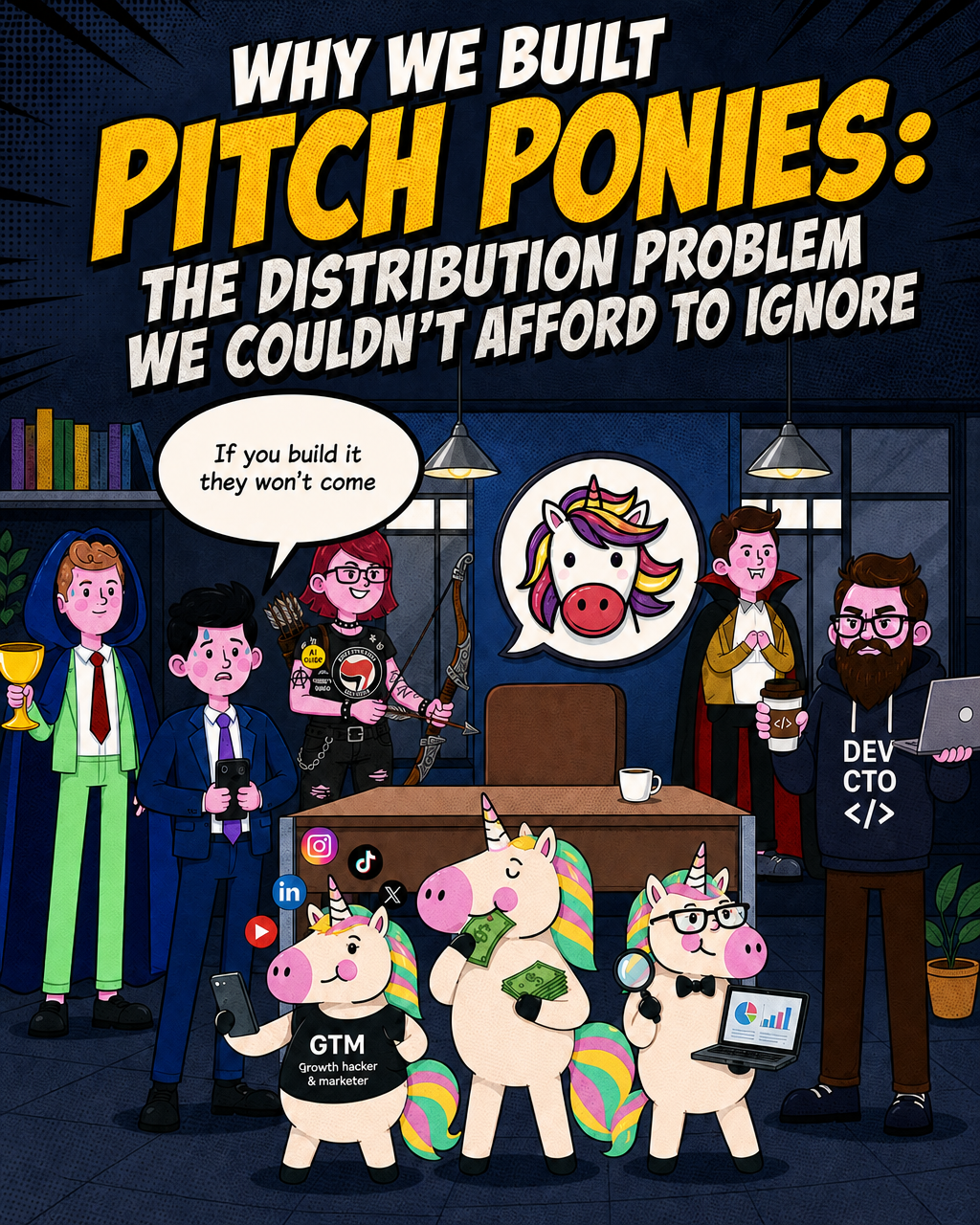
Why We Built Pitch Ponies: The Distribution Problem We Couldn't Afford to Ignore
We're good at building things. That's not something I say to brag. It's actually where the trouble started.
We'd ship a product, refine an offer, build something we genuinely believed in. And then we'd hit a wall. Not a technical wall. Not a product problem. A distribution problem. We needed an audience to know we existed, and we couldn't afford the machinery to tell them.
The Gap Nobody Warns You About
There's a version of the founder story that goes: build something people want, and they'll come. That version leaves out the part where you're standing in an empty room, holding a product you know is good, with no budget to get anyone into the room with you.
That was us.
We understood the work. We could scope a product, architect a system, define a value proposition. What we couldn't do was fund the kind of content and distribution operation that actually moves the needle without handing the whole thing over to an agency retainer we couldn't justify. Social media management for a small business — based on the quotes we saw — can run anywhere from $1,000 to $2,500 per month at the entry level, and that's before you factor in design, illustration, or any kind of branded visual identity. The numbers didn't add up for a team our size.
What We Kept Watching Happen
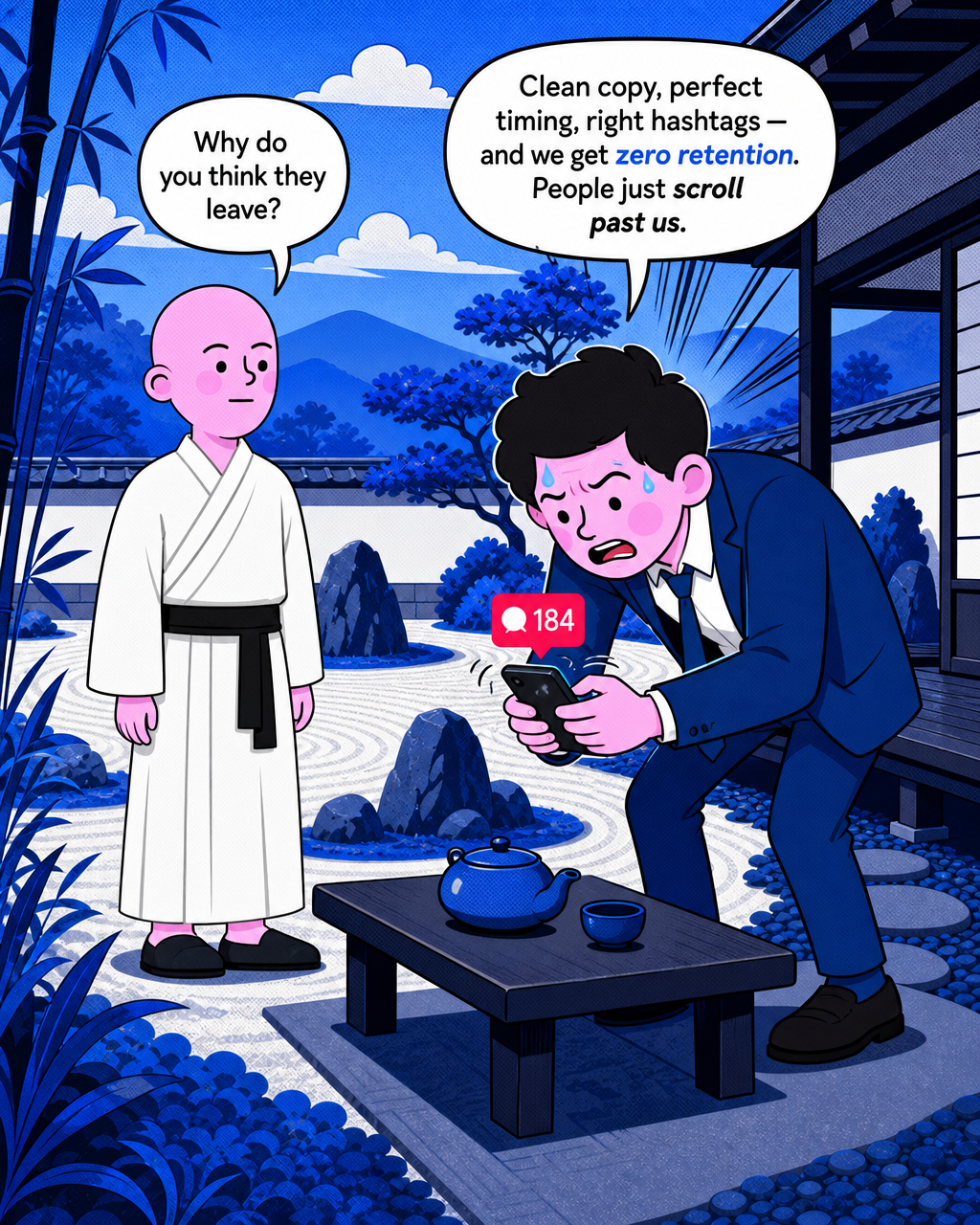
The more we looked at this, the more we saw the same pattern everywhere. Founders with genuinely good products, posting content that disappeared into the feed by Tuesday. No recurring characters. No visual narrative. Nothing to make a stranger stop scrolling and think: I've seen these people before, I want to know what happens next.
Among LinkedIn practitioners in 2026, the conventional wisdom is that content worth saving and sharing outperforms content that merely earns a like. Carousels and multi-panel formats tend to outperform static posts on engagement — some studies have reported meaningful multipliers, though figures vary by study, time period, and audience. But producing that kind of content week after week, with consistent characters and a recognisable visual style, typically requires either a designer on retainer or an illustrator upfront. Based on estimates we encountered, branded character illustration can cost anywhere from $2,000 to $15,000 just to get started — though costs vary widely by artist, style, and scope — with no guarantee the audience will care once you've spent it.
For most indie founders and small agency teams, that's not a realistic option. So they skip the characters. They post generic content. Their brand looks like it's winging it, because the budget for anything better just isn't there.
The Moment We Decided to Build It Ourselves
It started with a line we kept coming back to in our own internal conversations: that we are great at building products and service offerings but that we needed help with distribution that we could not afford.
That sentence did a lot of work for us. It named something we'd been circling around without saying plainly. We weren't bad at marketing because we lacked ideas. We were bad at distribution because the cost of doing it properly, with branded characters, consistent visuals, and a real narrative arc across posts, was priced out of reach.
So instead of hiring our way around the problem, we built our way through it.
What We Actually Built
Pitch Ponies is the tool we needed before we knew how to build it. It currently integrates with WordPress and Wix, fitting directly into workflows many founders already use, with more platforms planned. You brief it once on your product idea, your brand, your characters. It locks those in. Every campaign after that inherits them automatically, so your sixth post looks like it was planned alongside your first.
One brief generates a full campaign: Instagram, LinkedIn, email, formatted and ready to ship. The reformatting step, the one that eats the most time in any content operation, disappears.
The characters stick around. That's the part that matters most. Generic AI image tools give you a different face every time. Pitch Ponies is designed to significantly reduce that visual drift — locking in your brand's specific cast after the first campaign and maintaining strong character consistency across subsequent ones. No style guide. No designer watching over every output.
Why This Matters Now
Feeds are noisier than ever. Organic reach is less predictable, paid distribution has trended more expensive, and audiences in 2026 are increasingly adept at ignoring content that doesn't earn their attention. The brands that cut through aren't necessarily the ones with the biggest budgets. In our experience, they tend to be the ones with the most recognisable story.
In our experience, a comic strip with a recurring character earns a follow more reliably than a single polished graphic. We built Pitch Ponies because we believe indie founders and small agencies shouldn't need a six-figure creative budget to compete on consistency and brand recognition.
We built the thing we couldn't afford to hire. And now it's yours.
Ready to stop winging your content and start building a brand people remember? See how Pitch Ponies works at pitchponies.com.

Pitch Ponies
Your go-to-market function, from week one.
Your go-to-market function, from week one.
Learn more about Pitch Ponies and get started today.
Visit Pitch Ponies