How to Win the Volume Game Without Posting More
Winning the volume game isn't about your posting schedule
Every week, thousands of indie founders and agency teams sit down to produce social content with the same problem: they're creating a lot, but nothing sticks. The volume game in content marketing has a dirty secret. More posts don't build brand recognition — consistent posts do. And consistency without a system is just expensive noise.
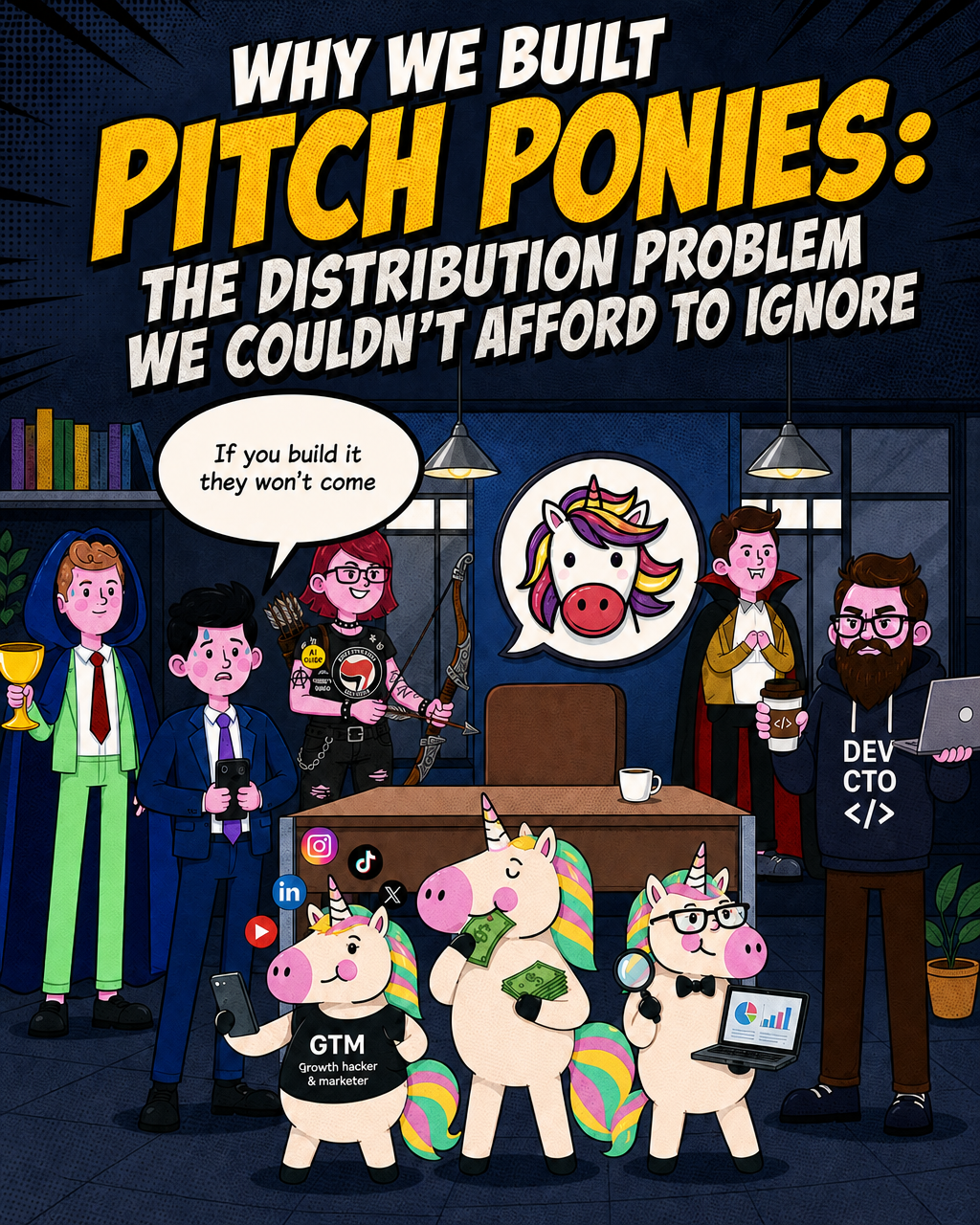
This is the story Pip and the Pitchponies cast play out in our latest comic. A founder flooding the feed with fresh content every day. A brand that nobody remembers by Friday. And the moment everything changes.
Volume without consistency is just noise
Here's the uncomfortable truth about high-frequency posting. The feeds on LinkedIn and Instagram are already saturated. Some industry analyses find that LinkedIn carousels outperform other post formats on engagement — but that advantage evaporates the moment your visual identity shifts post to post. Audiences remember characters, not individual images. Without a recurring cast holding the visual thread, each post starts from zero.
Pitch Ponies solves this by locking in your brand characters after a single brief. Every future campaign inherits them automatically — see the product walkthrough for a demonstration of how this works in practice.
One brief. Every format. Simultaneously.
The part of content production that eats the most time isn't the idea. It's reformatting. There is a broadly observed pattern that creators who post consistently over an extended period — several months or more — tend to see stronger per-post engagement than those who post sporadically, though the relationship is difficult to isolate cleanly. But reaching that cadence while manually resizing assets for Instagram, LinkedIn, and email is exactly what burns out solo founders and boutique agencies alike.
Pitch Ponies outputs a full campaign from a single brief. Instagram panels, LinkedIn carousels, email assets — ready at the same time, already sized. No resize handles. No format juggling.
Recurring characters give you a structural feed advantage
A single polished graphic gets a glance. A comic strip with a character your audience recognises gets a follow. Some platform analyses indicate that LinkedIn's native document format — the format most aligned with Pitch Ponies' comic carousel output — tends to lead other formats on engagement, and that carousels generate meaningfully more saves than single-image posts. Saves are widely believed to signal content quality to platform algorithms on both LinkedIn and Instagram, though neither platform publicly discloses the precise weighting of individual signals.
But format alone doesn't explain the advantage. The structural edge comes from narrative continuity. When your audience sees Pip galloping into another product update, or Fred looking pained over a competitor's tech stack, they're not seeing content — they're catching up on a story. That's the difference between reach and recognition.
The cost maths change completely at volume
A freelance illustrator commission for a branded character set runs anywhere from $2,000 to $15,000 upfront, depending on scope, the number of characters, experience level, and usage rights. That fee doesn't get cheaper the more you post. It just sits there as a fixed cost per brief, which means every incremental campaign makes the unit economics worse.
With a plugin-native workflow, the opposite is true. The more campaigns you run through Pitch Ponies, the lower your effective cost-per-asset. The character library compounds. The briefs get faster. The output scales without the overhead scaling with it.
Recognition compounds. Reach doesn't.
There is a broadly observed pattern in content marketing that disciplined, consistent programs tend to outperform high-volume, unmeasured production — though isolating that variable from content quality and audience fit is difficult. Creators who maintain a posting cadence over many weeks tend to see stronger per-post performance. But the compounding effect only works if the content feels like a series — not a sequence of disconnected experiments.
That's what recurring characters do. They make each post a chapter in something bigger. Something worth following. Something that looks, week after week, like a real brand.
It's worth noting that a comic-character approach won't suit every brand voice or industry — results will vary depending on audience, sector, and how well the format aligns with your positioning. The evidence for consistency and visual continuity is strong, but the right execution will look different for different teams.
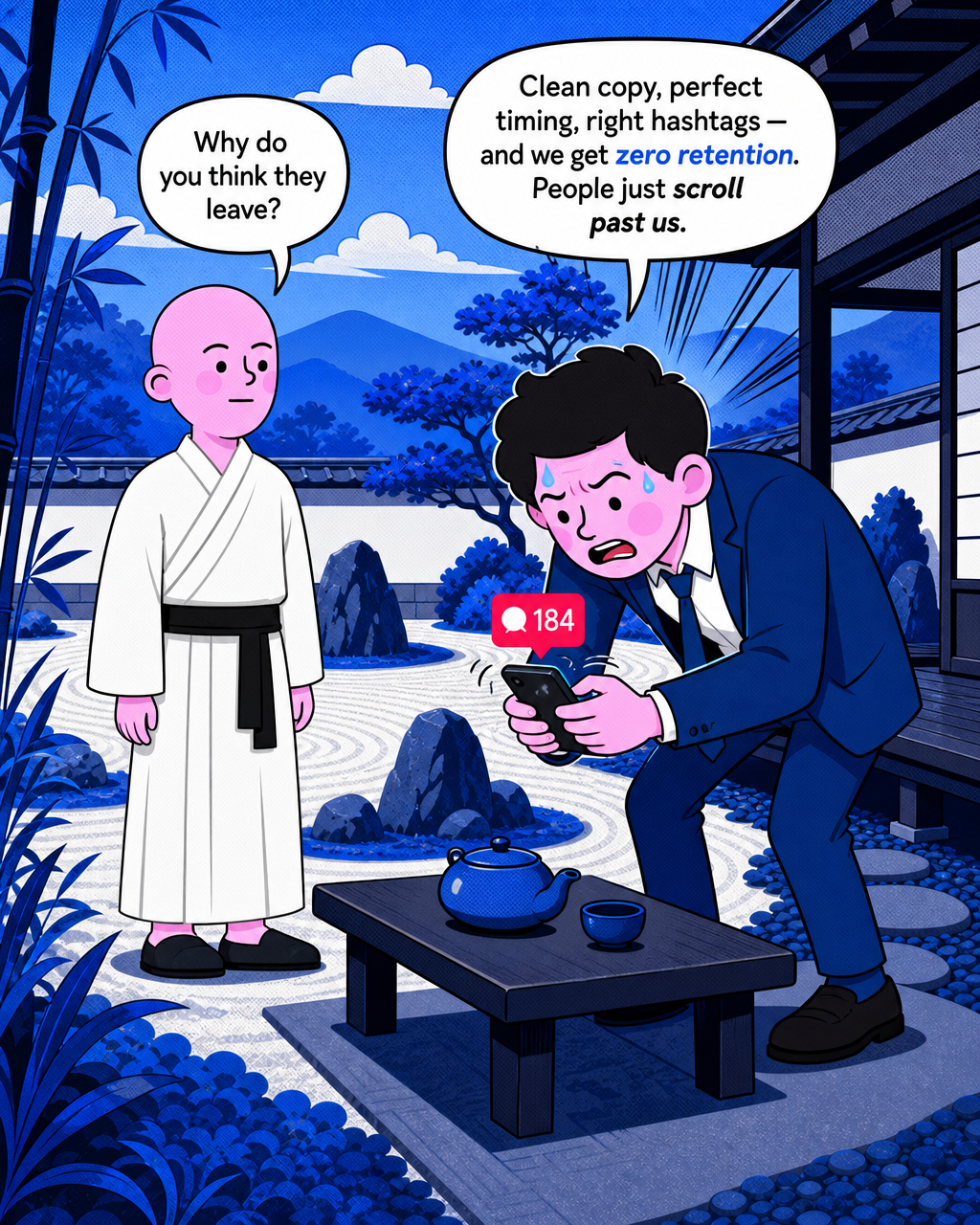
The comic that accompanies this post shows exactly what happens when a founder tries to win the volume game without that system — and what changes the moment the characters lock in.

Pitch Ponies
Your go-to-market function, from week one.
Your go-to-market function, from week one.
Learn more about Pitch Ponies and get started today.
Visit Pitch Ponies