Do You Need Venture Capital to Build Your Audience?
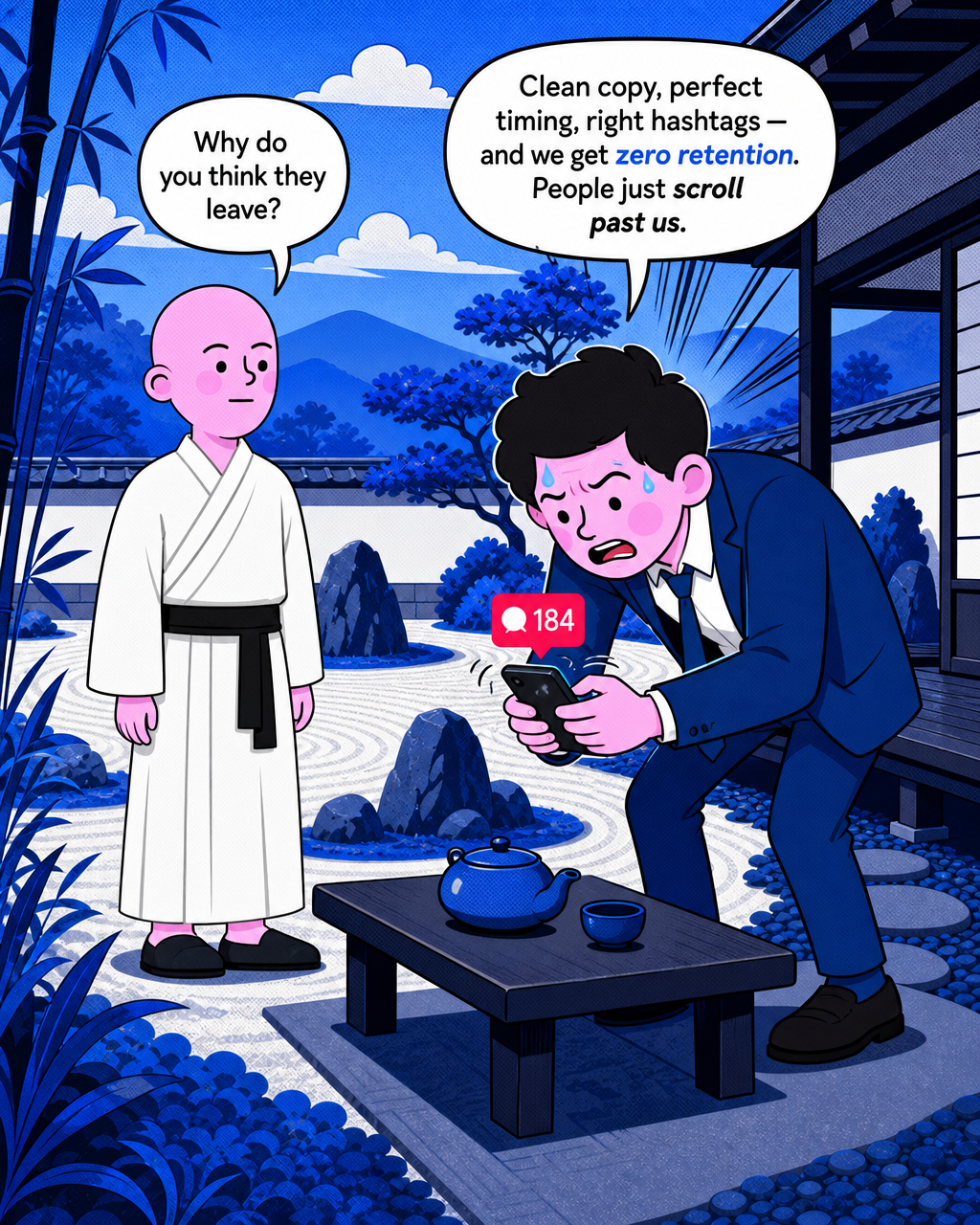
Every week, another founder watches a VC-backed competitor flood LinkedIn with polished ads and thinks the same thing: I just need more money. More budget. More firepower. More of whatever those people clearly have that I don't.
Here's the uncomfortable truth: that's not what they have. What they have is a paid traffic tap. And the moment the money runs out, the tap closes. The audience doesn't follow them home.
Distribution isn't a budget line. It's a skill. And right now, before you've raised a single pound or dollar, is exactly when you should be building it.
The VC Assumption Nobody Questions
Most founders quietly believe that audience growth is a money problem. Raise enough capital, buy enough ads, hire a content team, and the followers come. It's a tidy story. It's also mostly wrong.
Paid campaigns buy attention. They rent it, really. The moment the campaign ends, so does the attention. There's no compounding, no memory, no reason for someone to come back next Tuesday expecting something from you.
Organic content, built consistently and recognisably, does something different. It builds familiarity. And familiarity, it turns out, compounds the same way compound interest does.
Think about Vlad.
Vlad Always Gets Paid Back
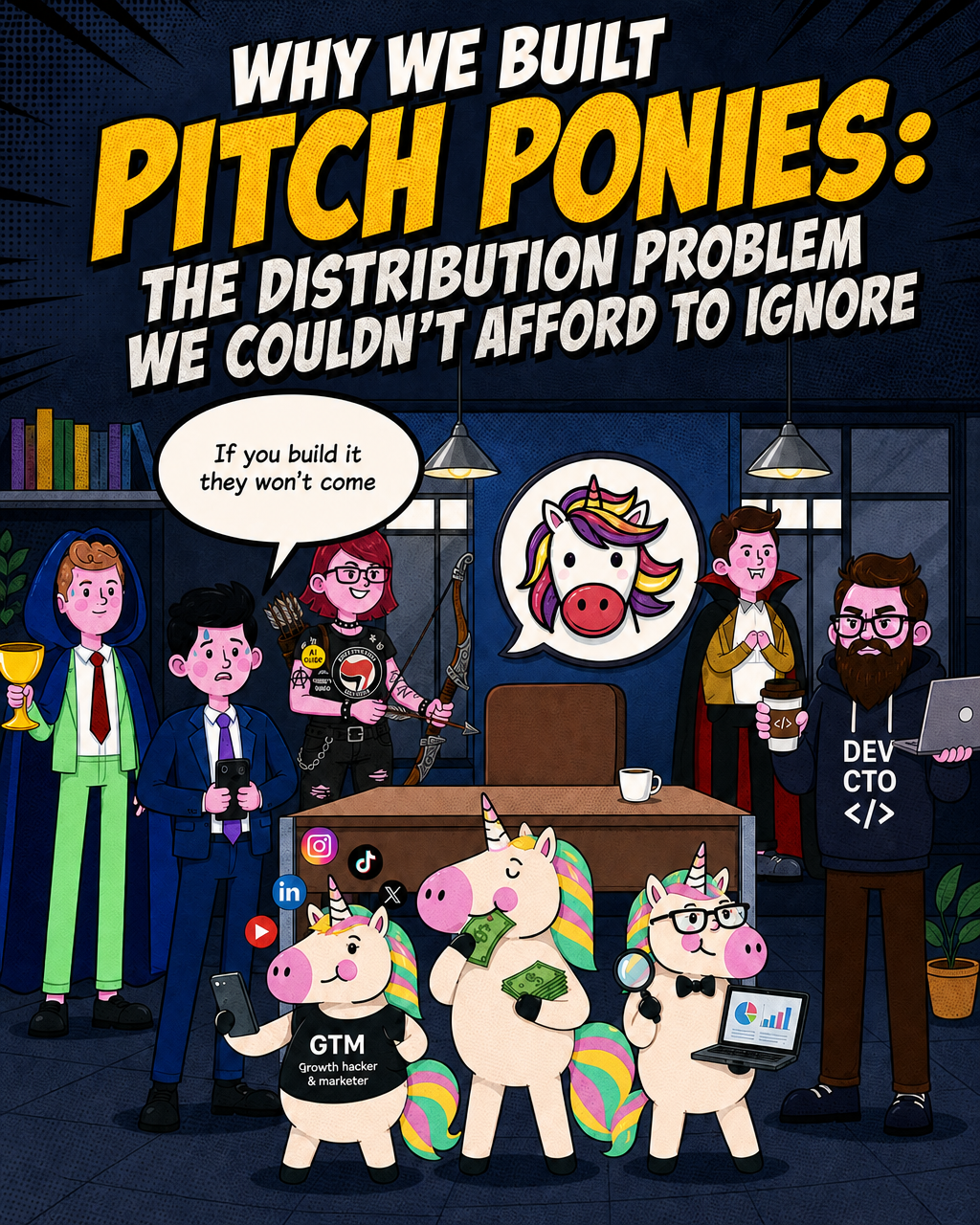
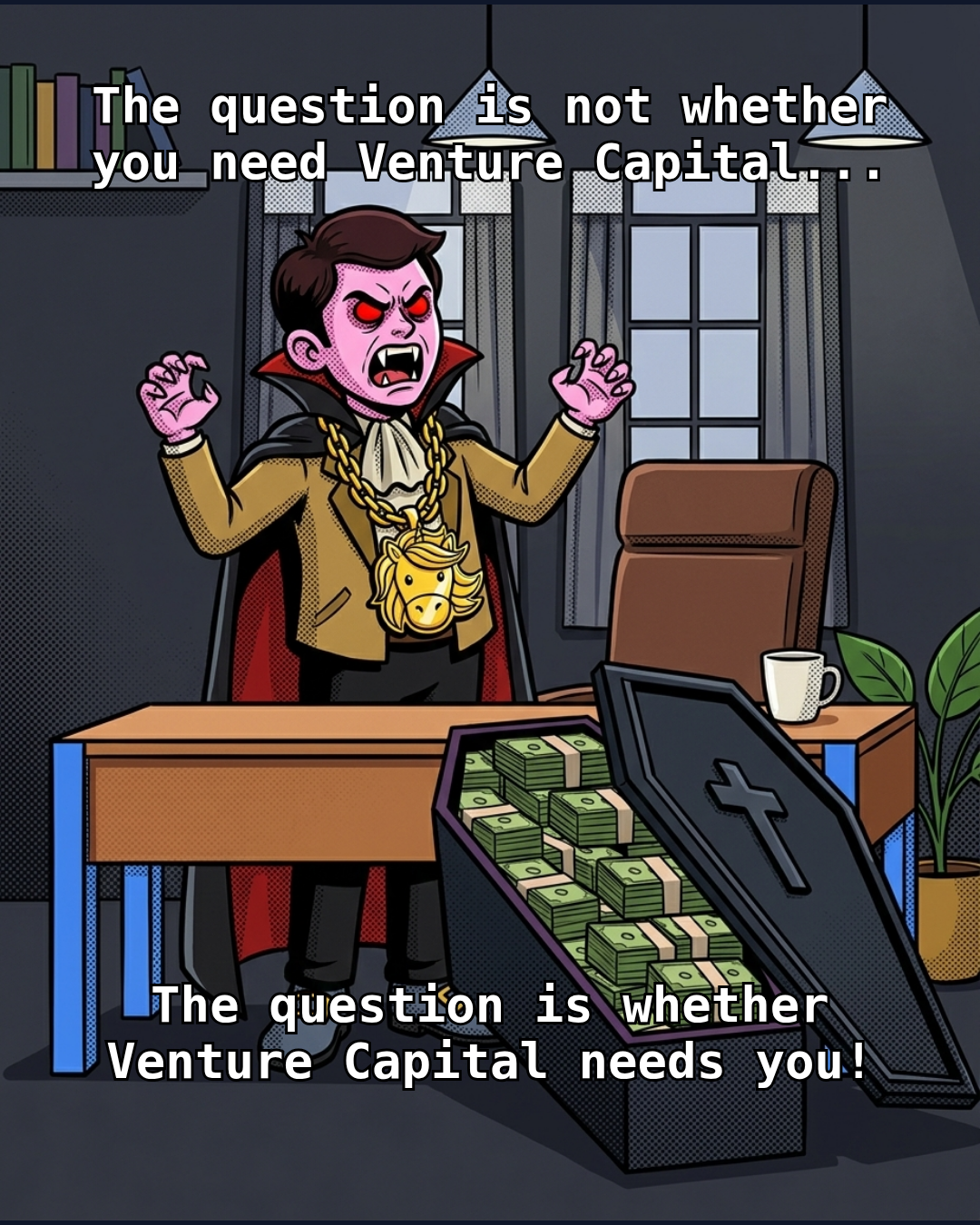
Vlad is one of Pitch Ponies' recurring branded characters, a gleefully scheming vampire VC who leans forward with fingers pressed together and a sharp little smile. He exists in a universe of founders, builders, and misfits, showing up week after week in comic strips, campaign assets, and social posts.
Here's what makes Vlad useful as a marketing asset: if you've seen one Pitch Ponies comic, you know exactly who Vlad is the next time he shows up. You don't need to be reintroduced. You don't need context. You just... remember him.
That's the compound effect of a recurring character. Every appearance builds on the last. The audience's brain does the hard work for you, filing Vlad away as familiar, as trustworthy, as part of the brand universe. No ad spend required.
This is what funded competitors can't easily buy. You can't write a cheque for familiarity. You build it, post by post, character by character, week by week.
The Formats That Actually Win Right Now
Multiple social media studies in recent years have pointed in the same direction: carousel posts tend to generate meaningfully higher engagement than static images or single-panel video on both LinkedIn and Instagram. On LinkedIn, carousels appear to outperform most other post formats by a significant margin; on Instagram, they consistently rank among the highest-engagement post types. These patterns have held across several reporting periods, though exact figures vary by study, industry, and audience size — and paid campaigns in competitive categories can shift the picture considerably.
Comic strips built as carousels sit squarely in that higher-performing format category. They're multi-panel, swipeable, story-driven. They give people something to read, not just something to see.
A static branded graphic gets a glance. A Vlad comic is designed to earn a save, a share, and a comment — the signals that actually move the algorithm — without costing more than building the content properly in the first place.
Owned Content Outlasts Any Paid Campaign
Here's the part that most growth advice skips over. The real problem with paid campaigns isn't the cost. It's the ownership structure.
When you run ads, the platform owns the relationship. The moment you pause spend, you become invisible again. Your audience didn't subscribe to you; they were served you. There's a difference.
When you build a content system inside your own CMS, on your own WordPress or Wix site, with a consistent visual identity and recurring characters your audience recognises, you own that. Every post you publish strengthens a narrative that lives on your terms, not Meta's or LinkedIn's.
A widely held principle among content practitioners is that consistent cadence matters more than volume: publishing one quality piece monthly tends to serve an audience better than dropping three articles in a week and then going quiet for months. Consistency builds audience expectations and trust. That principle applies to founders just as hard as it applies to VC firms. Your audience is training themselves to expect you. Give them a reason to.
The founders who build the loudest pre-funding audiences aren't the ones with the deepest pockets. They're the ones who show up in the same visual voice, with the same recognisable characters, telling the same ongoing story, every single week. They look deliberate. And because they look deliberate, they look credible.
The Founders Who Win Pre-Funding
Before the first investor cheque arrives, you have one real competitive weapon: your story. Not your pitch deck. Your ongoing, visible, public story about what you're building, why it matters, and who you are as a founder.
The founders who do this well share one thing in common. They've stopped treating every social post as a one-off. Instead, they build narrative arcs. Product updates become episodes. Launches become chapters. Failures become plot twists their audience actually talks about.
Many practitioners and investors who work at the pre-seed stage observe that a significant number of early-stage funds favour founders they already know, or startups operating in sectors they're actively tracking. From that perspective, the relevant question for many investors is less about traction metrics and more about narrative: do you have a unique insight, a credible team, and a market big enough to justify institutional capital? This reflects a common view among practitioners rather than a universal rule — fund behaviour varies considerably by geography, sector, and individual thesis.
Notice what that framing says. Narrative. Not follower count, not ad spend, not a glossy brand identity requiring significant upfront investment. Narrative.
An audience that recognises your characters, anticipates your next post, and shares your content with their network is a meaningful proof point to bring into a fundraise. It signals that you've already figured out distribution. And distribution is the hardest part.
This Is Exactly What Pitch Ponies Was Built For
Disclosure: this post is published by Pitch Ponies to explain the thinking behind the product.
Pitch Ponies exists for the moment before the money arrives.
Not to replace a design team once you have the budget to hire one. Not to bolt onto a campaign strategy you've already built. But to give solo founders, scrappy agencies, and early-stage teams a recurring cast of branded characters and a full multi-format campaign from a single brief, inside the CMS they already use, in minutes instead of weeks.
You type your product update once. Pitch Ponies is designed to produce a story-driven comic campaign formatted for Instagram, LinkedIn, and email, with characters built from your first brief so that every future post shares a consistent visual identity. As with any AI-assisted tool, output quality and character consistency will vary depending on brief clarity and use case — it works best for teams who already have a clear sense of their brand voice.
Vlad shows up every week because the system remembers him. Your characters are designed to show up every week for the same reason.
And that consistency — that recognisable visual rhythm that compounds week after week — is what makes an audience decide you're worth following before any investor has decided you're worth backing.
Paid campaigns have their place, and for many businesses they're a legitimate and effective part of the mix. But if budget is limited and you're building from scratch, a system that compounds over time is worth considering alongside, or before, a media spend.
You don't need a war chest. You need a system.

Pitch Ponies
Your go-to-market function, from week one.
Your go-to-market function, from week one.
Learn more about Pitch Ponies and get started today.
Visit Pitch Ponies