Canva templates vs. recurring characters: what your audience actually remembers
Disclosure: This post is written by the team behind Pitch Ponies. We've tried to make the analysis as honest as possible, but readers should know we have a commercial interest in the conclusions.
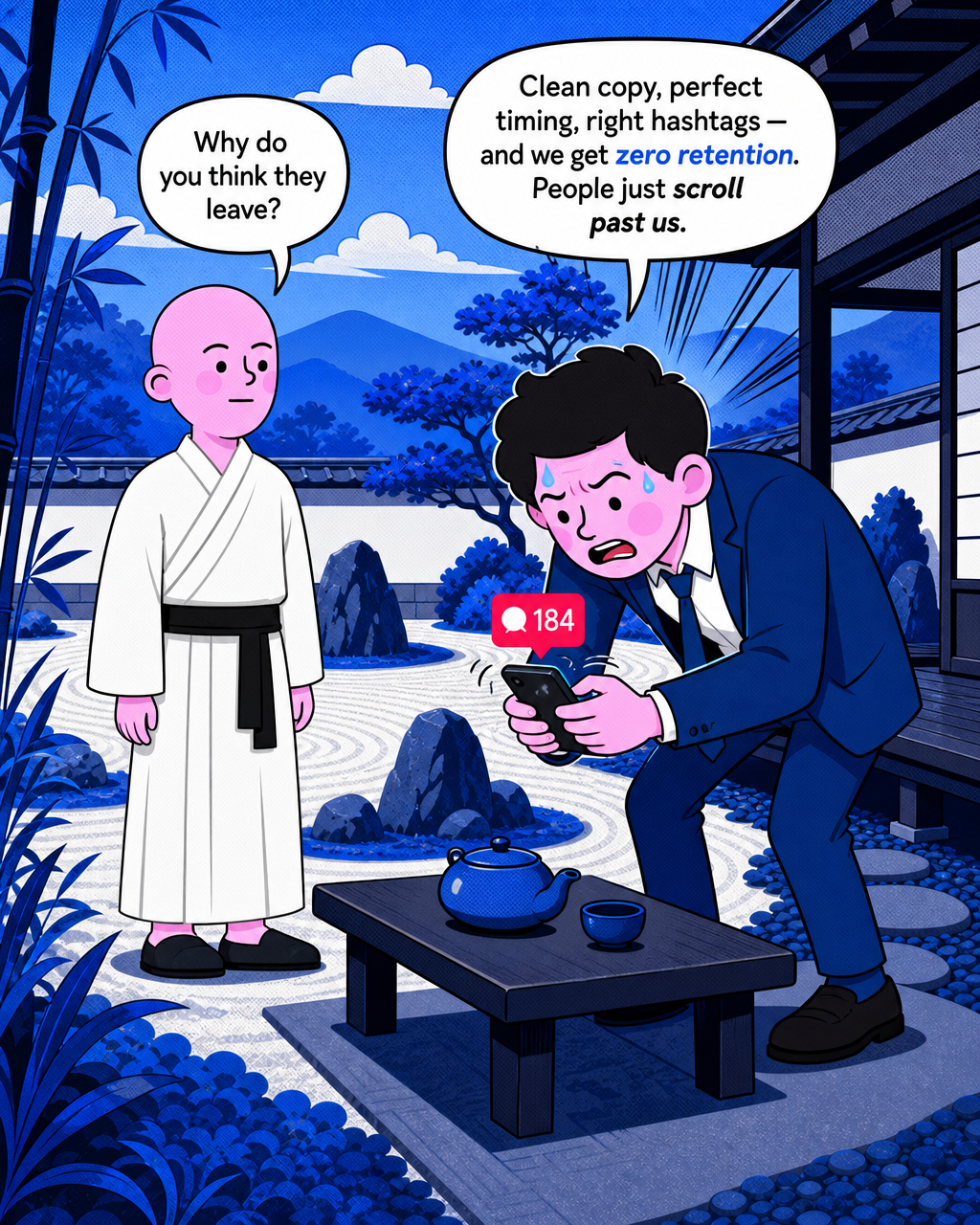
Canva looks clean. Nobody remembers it.
That's not a slight against the tool. Canva is genuinely useful for producing polished visuals quickly. But polished isn't the same as memorable. And in a feed that moves faster every quarter, the gap between those two things is where a lot of startup content quietly dies.
The question worth asking isn't whether your posts look professional. It's whether your audience would notice if your brand disappeared from their feed tomorrow. For many indie founders and small agencies using template-based tools, the honest answer is no.
What Canva templates actually produce
A Canva template gives you visual consistency within a single post. You pick a layout, swap in your colours and logo, write a caption, and ship it. The post looks clean. It might even get a few likes.
But the next week, you open a different template. Different layout. Different visual rhythm. Same logo, different everything else.
Over six months, your feed becomes a mood board, not a brand. There's no thread connecting post twelve to post one. No character your audience has come to recognise. No visual shorthand that says this is us before they've read a single word.
That's the core problem with template-first content: every post is an isolated event. It has no memory of the posts before it, and your audience has no reason to expect the posts after it.
What the algorithm actually rewards
Evidence suggests the LinkedIn algorithm rewards dwell time heavily — posts that hold attention longer tend to get wider distribution — though LinkedIn does not fully disclose its ranking criteria, and factors such as connection strength, content relevance, and engagement velocity also play a role.
Carousels and multi-image posts tend to outperform text-only posts on engagement metrics, according to benchmark reports from social analytics platforms — though figures vary significantly by account size, industry, follower count, and the specific period measured. The gap is worth taking seriously regardless of the precise numbers.
The reason carousels and multi-image posts pull stronger engagement isn't just format. It's story. Extended dwell time on carousel content isn't because the slide count is high. It's because there's a reason to keep going. A narrative. A cast. Something that makes the next panel worth the swipe.
A recurring character does something a colour palette never can: it gives the audience a reason to feel something before they've read the headline. And feeling precedes remembering.
The visual drift problem nobody talks about
Here's what happens to many indie founder brands over a twelve-month content run without recurring characters.
Month one: strong brand colours, crisp launch energy, coherent look.
Month four: a freelancer took over for three weeks, used slightly different fonts, introduced a new template.
Month eight: the brand refresh changed the primary blue. Half the archive looks wrong now.
Month twelve: the content calendar has posts from six different Canva template packs. There's no visual throughline. New followers scrolling back can't tell it's all one company.
This is visual drift. It's not dramatic. It creeps in one post at a time. And branding research consistently suggests that visual consistency builds audience trust over time — a signal that visual drift quietly chips away at, week by week, without ever triggering a single crisis meeting.
A recurring cast of brand characters can resist this in a way that a style guide or template library cannot. Characters are self-consistent. They look the same in post six because they looked the same in post one. The audience doesn't need to relearn who you are.
A cast, not a colour palette
Think about the indie brands that have built genuine audience loyalty through content. Not through ad spend, not through a big launch, but through a steady weekly presence that people actually look forward to.
Many of the most recognisable among them have a character. A mascot. A recurring voice or face or visual device that anchors every post to something recognisable. The audience doesn't just see a post. They see an episode.
This is the insight that most template-focused content tools miss entirely. A style guide tells you what colours to use. A recurring character tells your audience what world they're in.
Comics and character-driven content work in this environment because they're built for it. They're naturally multi-panel, which extends dwell time. They're sequential, which builds anticipation. They're shareable, because people don't forward a template — they forward a story they want someone else to see.
The narrative arc pattern across a four-panel strip does similar cognitive work to a season of television, at a fraction of the investment. The audience knows the character. They know roughly what to expect. And when the character shows up in the feed, there's a split-second recognition response that no blue hex code ever created.
Why templates keep winning the short game and losing the long one
Templates are fast. That's a real advantage. When you're a solo founder with a product to ship and a Wednesday content slot to fill, a template is an answer, not a compromise.
But fast and memorable are rarely the same thing. Repeated ad exposure builds brand recognition, but only when there's something consistent to recognise. Repeated template swapping produces volume without recognition. The output exists. The memory doesn't.
Recurring characters are likely to improve recall compared to interchangeable template visuals — though rigorous studies comparing the two directly are limited. Where that gap exists, it isn't explained by production value. It's explained by familiarity. The audience has seen the character before. They've developed a response to it. The character carries the memory across every post that features them.
A Canva template cannot do that. A well-designed recurring character can do almost nothing else.
How Pitch Ponies addresses the visual drift problem
The reason most founders don't use recurring characters isn't that they don't understand the value. It's that building a character set costs real money, takes weeks, and locks you into a creative direction before you've validated your messaging.
Freelance illustrators typically charge anywhere from $1,500 to $30,000 or more for a branded character set, depending on scope, experience level, and usage rights — the range varies widely. And once the illustrations are delivered, you still need someone to generate new panels every week. The cost doesn't end at the character sheet.
Pitch Ponies is a WordPress and Wix plugin designed to change that equation. You brief your brand once. Characters are established after the first campaign, and for most standard campaign types, every future post inherits them automatically — reducing the need to write new creative briefs or commission new illustrations for each piece of content. (Brand evolution or significant pivots may require character updates, and the approach works best within supported content formats.)
For most standard content types, one product idea can generate a full campaign: formatted outputs for Instagram, LinkedIn, and email — reducing or eliminating manual resizing for the majority of use cases. The characters appear in panel one, panel four, post ten, and post fifty. Your sixth post looks like it was planned alongside your first, because in the Pitch Ponies system, it was.
The thing worth building toward
Content volume is not a brand. Aesthetic consistency is not a brand. A brand is what your audience thinks about in the gap between your posts. What they expect to see next week. Whether they notice when you go quiet.
Recurring characters are designed to create that. Templates make it harder.
In our observation, the founders building the most recognisable presences on LinkedIn and Instagram tend to be those with a consistent cast or voice — not just a consistent colour palette. They post like they're writing episodes, not filing reports. That said, template-based tools remain genuinely useful for founders who are early-stage, resource-constrained, or whose content strategy doesn't lend itself to character-driven storytelling. The right tool depends on your goals.
If you're ready to stop templating and start storytelling, Pitch Ponies gives you the characters, the campaign, and the consistency, from a single brief.
If you're still templating every post and wondering why your audience doesn't

Pitch Ponies
Your go-to-market function, from week one.
Your go-to-market function, from week one.
Learn more about Pitch Ponies and get started today.
Visit Pitch Ponies