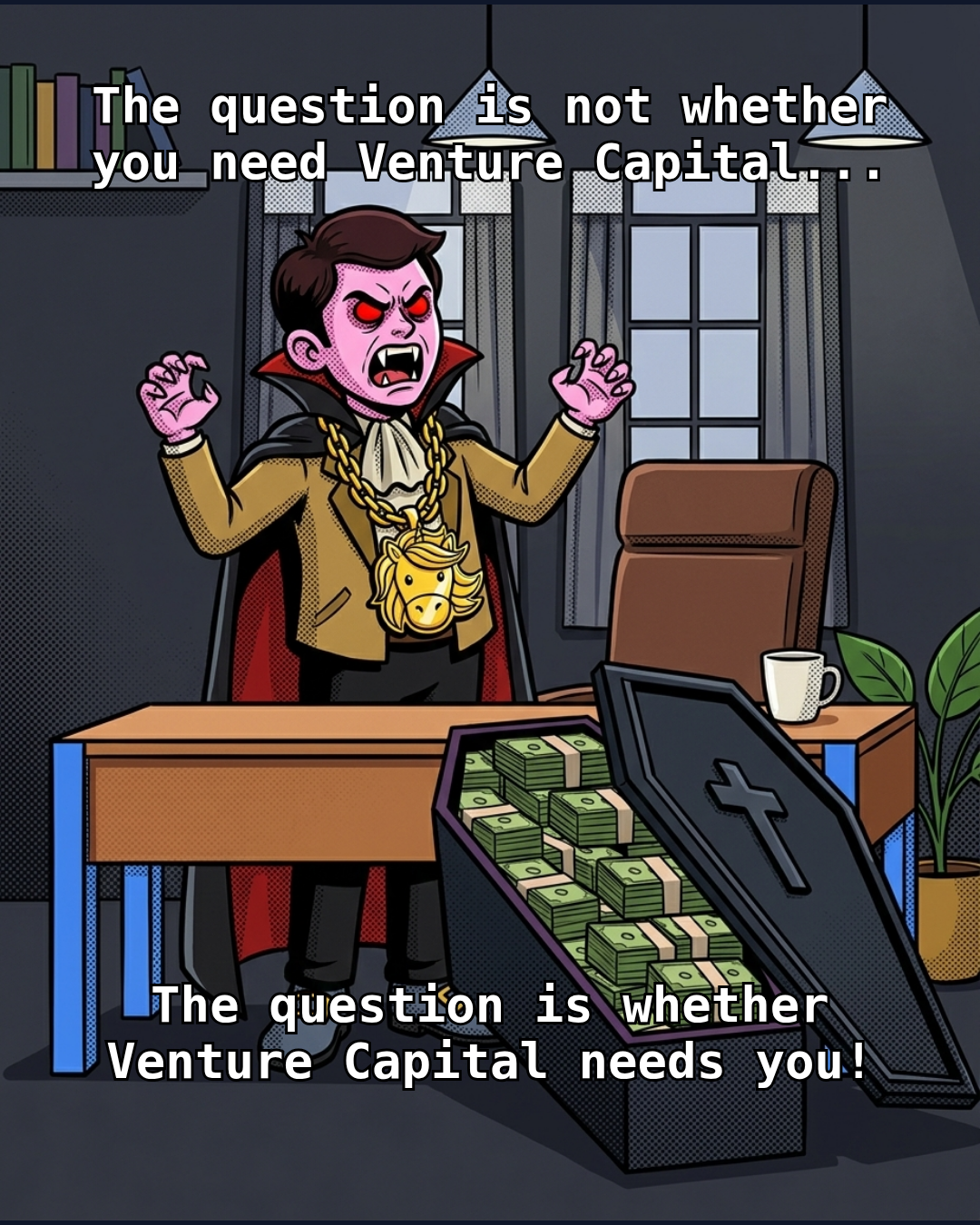
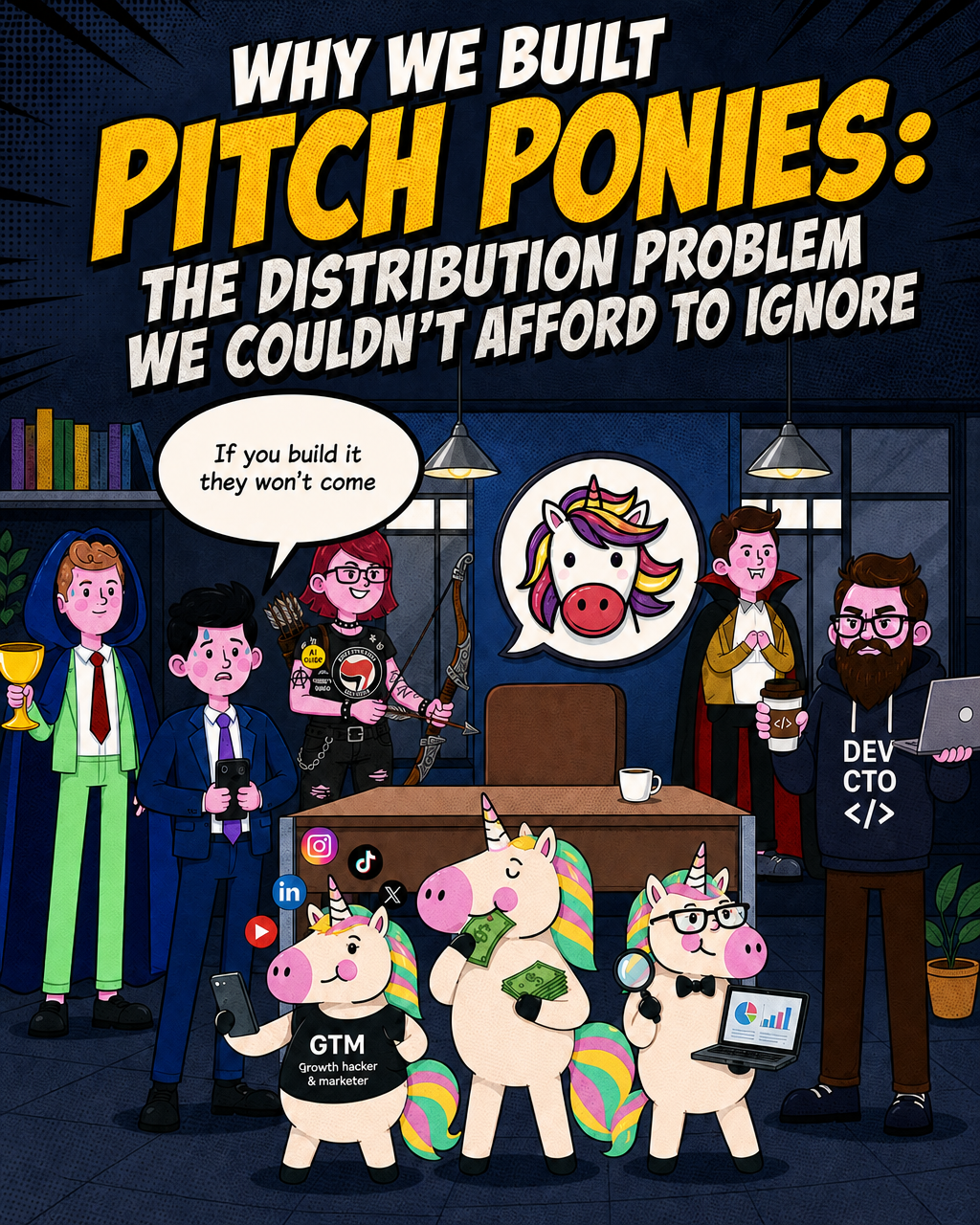
Your posts disappear because they have no one to come back for
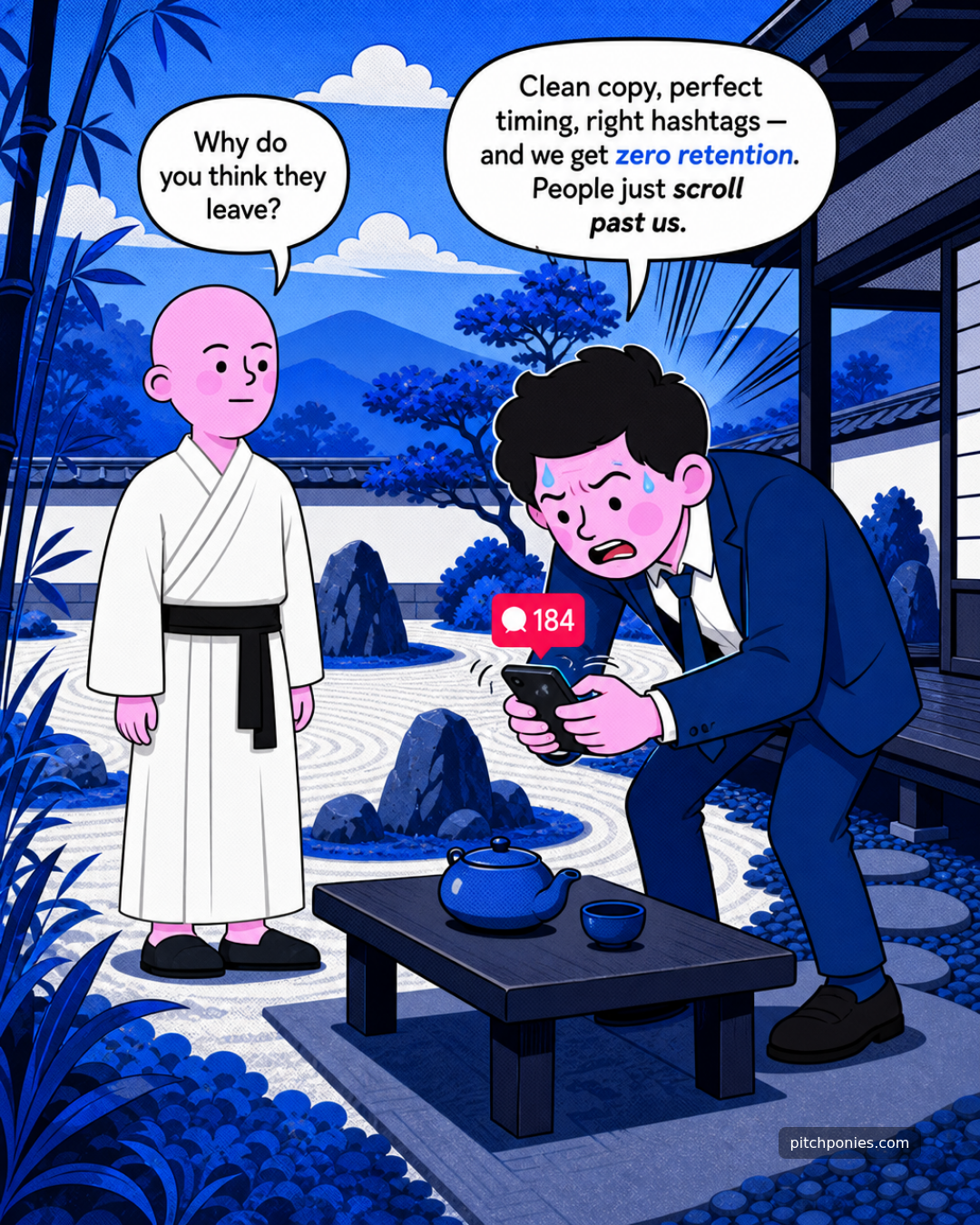
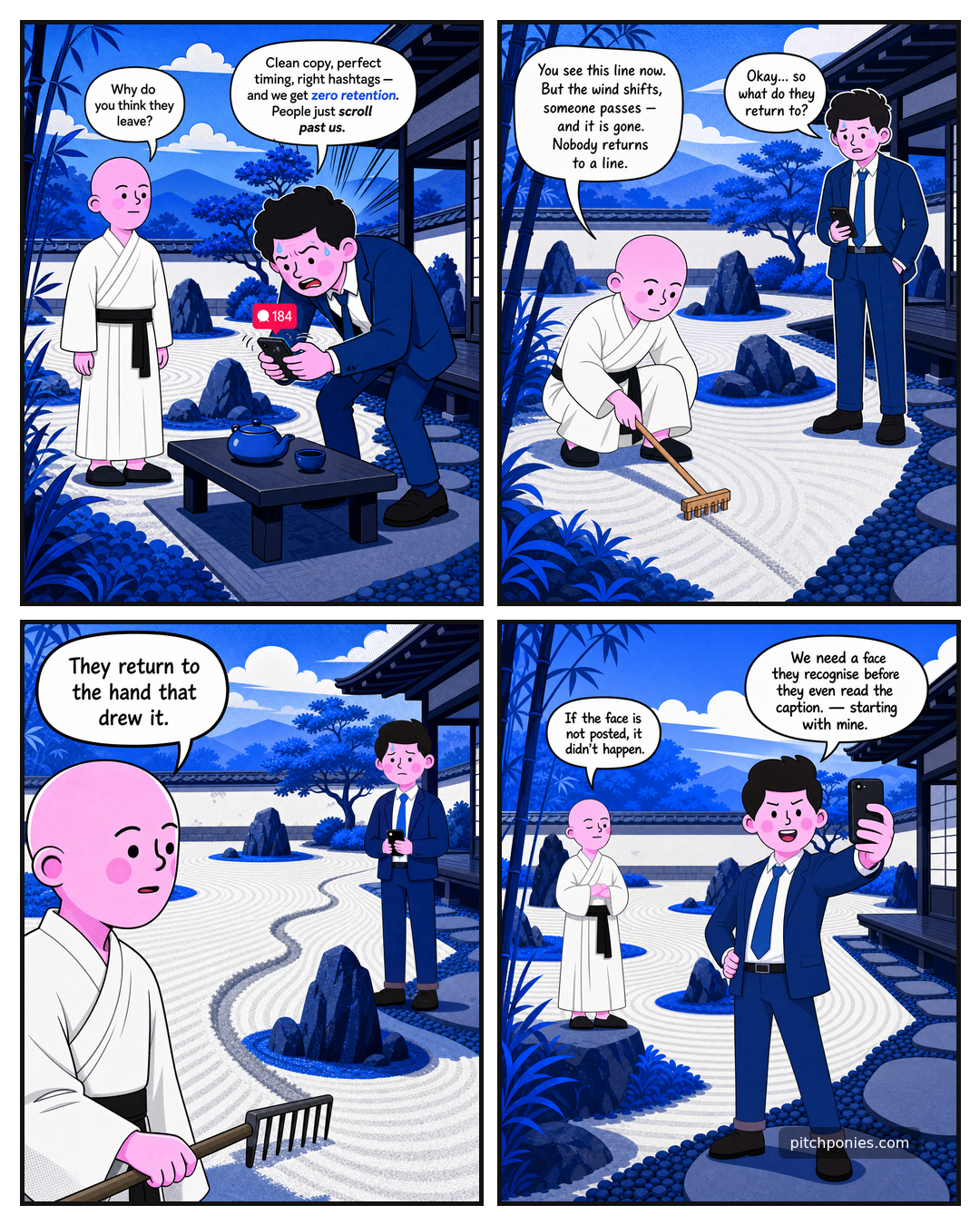
You posted three times this week. Nobody noticed.
Not a single DM. Not a meaningful comment. Just a handful of likes from people who like everything, and a reach number that's quietly humiliating. You did the work. You wrote the caption, picked the image, posted at the right time. And it evaporated.
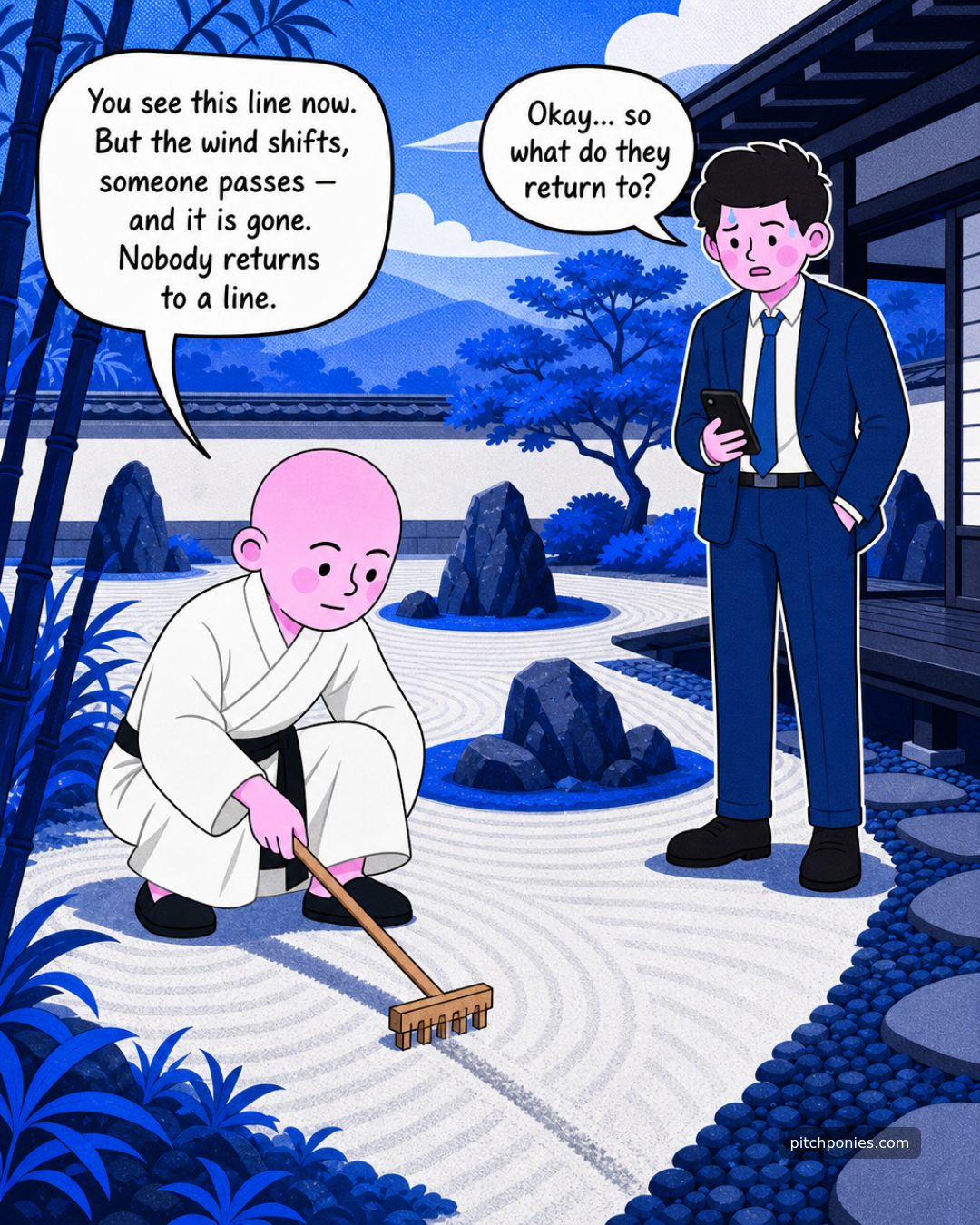
This isn't a posting frequency problem. It's not an algorithm problem either. It's a memory problem. And it's one that no content calendar is going to fix.
Every post without a character is a cold introduction to a stranger
Think about the last time a brand post stopped your scroll. Chances are, there was something familiar in it. A face you recognised. A character you'd seen before. A tone that felt like running into someone you know.
That's not an accident. Research consistently shows that repeated exposure is required before a brand becomes memorable — and that recognition, once established, meaningfully increases purchase likelihood. The exact numbers vary by study and category, but the underlying principle is well-supported: audiences need to encounter a brand multiple times before it sticks, and most indie founders are starting from zero every single time they post, because nothing carries over from one piece of content to the next.
When you post a product update without a recurring character, you're asking your audience to care about a stranger's news. Why would they? They don't know who's telling the story. There's no face to file it under. No personality to remember. Just another brand making claims in a feed full of brands making claims.
People connect with people more readily than with logos. It's one of those things that sounds obvious until you look at your own content and realise you've been posting logos, mock-ups, and product screenshots for six months straight.
Audiences don't follow brands. They follow personalities.
Scroll your LinkedIn feed right now. The posts that catch your eye aren't the ones with the best design. They're the ones where you already know who's speaking. You recognise the name. You recognise the face. You've seen the format before, and something in your brain says: this person again, I know what they're like.
That's the exact mechanism that makes recurring characters work. For many brands, episodic storytelling has proven more reliably effective than chasing viral moments — because episodic social media series can build sustained audience retention rather than one-off spikes.
The word that matters there is episodic. Not one-off posts. Episodes. When your audience can look forward to what happens next, they follow the series. They don't just see your content. They wait for it.
Think of it like your favourite TV show: an episodic structure gives your audience a reason to return for the next instalment, with the potential to turn passive scrollers into a more engaged, consistent audience.
A single polished image gets a glance. A comic strip with a face they've seen before gets a follow.
The 3-5 hours problem isn't about volume. It's about what you have to show for it.
Industry surveys broadly suggest that small businesses spend several hours per week on social media marketing — work that, taken together, can amount to a significant part-time commitment each month. The specific figures vary across studies, and any single number should be treated as an estimate rather than a precise benchmark.
What is consistent across those surveys is that social media ranks among the most time-consuming marketing activities for founders managing their own content. That's a serious chunk of your week. The brutal part isn't the hours themselves. It's that without a recurring visual identity, none of that work compounds. Post 50 times over three months, change your visual style four times, use stock photos twice and Canva templates the rest of the time, and your audience still doesn't know what you look like. Each post resets the clock.
Content creation is widely cited as one of the largest individual drains on that time, and the less-visible costs — decision fatigue, context switching, the cognitive overhead of restarting with no established system — make it even more expensive than the raw hours suggest.
So you're not just spending time. You're spending time and getting no memory equity for it. The content disappears, and next week you start again at zero.
Visual drift is a silent brand killer
Here's what visual drift looks like in practice. Your first post used an illustration from Fiverr. Your third was a Canva template in teal. Your sixth was a selfie with text overlay. Your tenth was a meme.
Your audience doesn't see a brand. They see noise.
Evidence from brand consistency research suggests that maintaining coherent visual branding — colours, typeface, logo — can substantially increase recognition, though the precise uplift varies by context and methodology. The directional finding is reliable even where specific percentage claims are not: inconsistency costs you recognition, and recognition is what makes the difference between someone scrolling past and someone stopping because they know who you are.
Users are more skeptical, AI-generated content floods the internet, and consumers have become better at spotting generic or inconsistent brands. Consistency signals legitimacy. Inconsistent brands feel temporary or careless.
When your sixth post looks like a different brand than your first, you're not building recognition. You're actively undermining it. Every new visual style your audience encounters is a brief re-introduction to a brand they haven't filed away yet. You're spending hours to stay invisible.
The argument is that in a saturated feed, people remember the format first, then the company attached to it. If you don't have a consistent format and consistent characters to anchor it, your audience can't remember you even when they want to.
A consistent face in the feed turns a post into an episode
This is the thing that changes everything: when you have a recurring character, your posts aren't posts. They're chapters.
Give audiences the arc, the recurring element — a character, a catchphrase, a visual signature that ties episodes together — and the destination. The content itself becomes a reason to follow, not just consume.
Sprout Social's published research has pointed to strong consumer appetite for original content series from brands, with series cited as a driver of anticipation, familiarity, and improved retention. (Readers should verify specific figures directly against Sprout Social's current published reports, as precise percentages shift across survey waves.)
Anticipation. Familiarity. Retention. Those are the words that turn a social feed into an audience. And the mechanism that produces all three is remarkably simple: the same face showing up every week, in a story that's clearly going somewhere.
When your audience sees a character they recognise, they don't just consume the post. They check back next week. They share it with someone who'd appreciate it. They start to feel like they know your brand, not just your product.
There is consistent qualitative evidence that audiences disengage from brands that feel repetitive or impersonal — what practitioners often call batch-and-blast marketing. Isolated posts with no narrative thread are, by definition, batch-and-blast. The antidote isn't better copy or a smarter hashtag strategy. It's a cast.
This is the problem Pitch Ponies solves
Disclosure: This article was produced by Pitch Ponies. The section below describes the Pitch Ponies product.
Pitch Ponies is a WordPress and Wix plugin built for exactly the founder described above. The one who's spending Sunday afternoon on content that disappears by Monday morning. The one who paid for a character set that no longer matches the product. The one whose sixth post looks like a completely different brand than their first.
You describe your product once. Pitch Ponies is designed to lock in your brand characters after the first campaign and regenerate them consistently post after post, so your audience starts recognising a face before they remember a name. One brief aims to produce a full campaign formatted for Instagram, LinkedIn, and email, reducing the need for manual resizing or reformatting.
Your posts don't have to be cold introductions. They can be the next chapter in something your audience actually wants to follow.
Start your first character-driven campaign at pitchponies.com
If this is your feed life right now, comment 'VOID' and I'll

Pitch Ponies
Your go-to-market function, from week one.
Your go-to-market function, from week one.
Learn more about Pitch Ponies and get started today.
Visit Pitch Ponies