How to build a weekly post your audience actually waits for
One character. Six posts. A brand people follow.
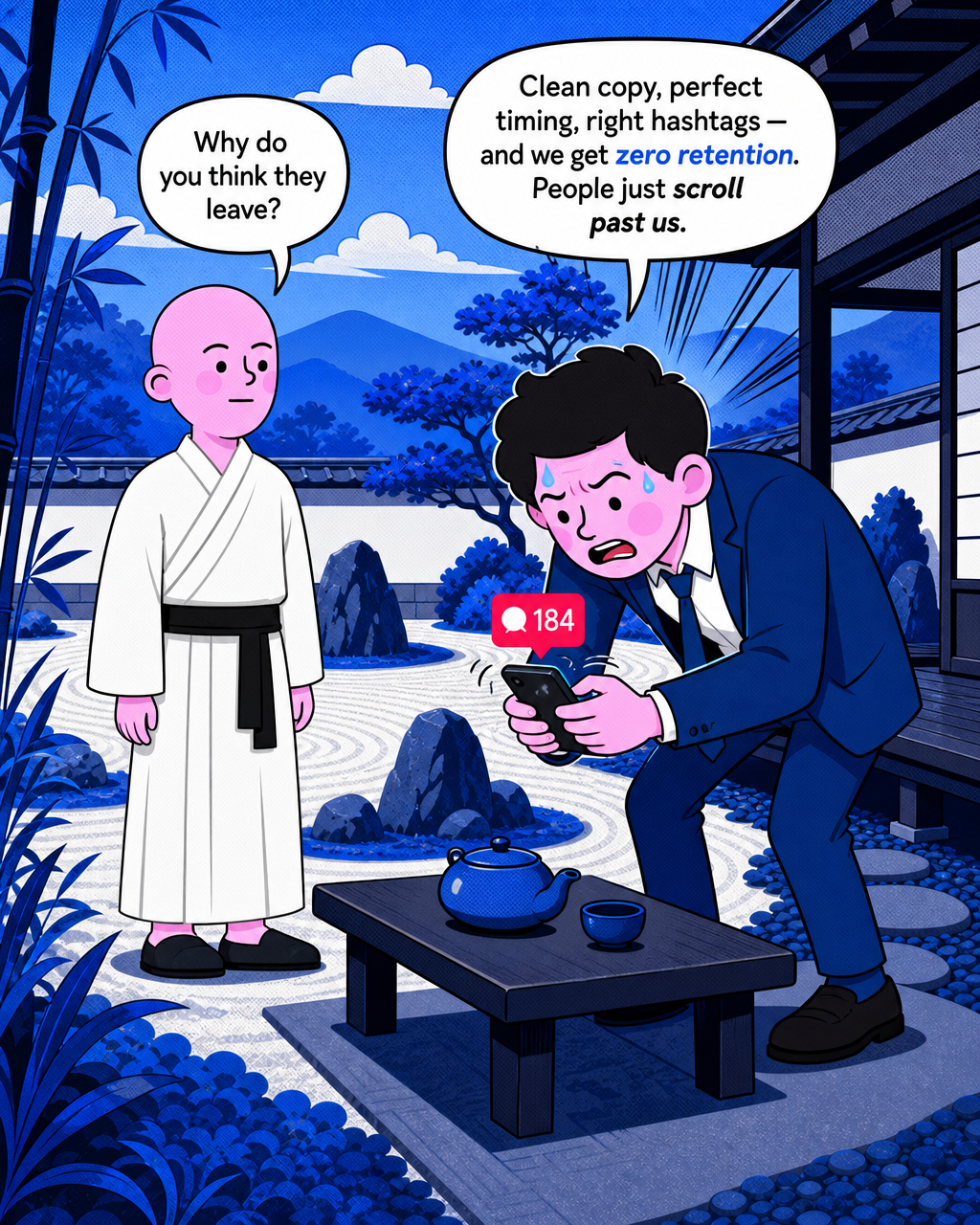
Most social content is built to fill a slot. A founder ships a product update on Monday, stitches together a Canva graphic, writes a caption in twenty minutes, and watches it get eleven likes before it disappears. The problem isn't the update. The problem is that nothing connects it to what came before, or what comes next. Without a recurring thread, every post starts from zero.
This post is about how to fix that. Not with a bigger budget or a fancier tool, but with one structural change: building your content around a character who shows up every single week.
Why recurring characters are the real algorithm hack
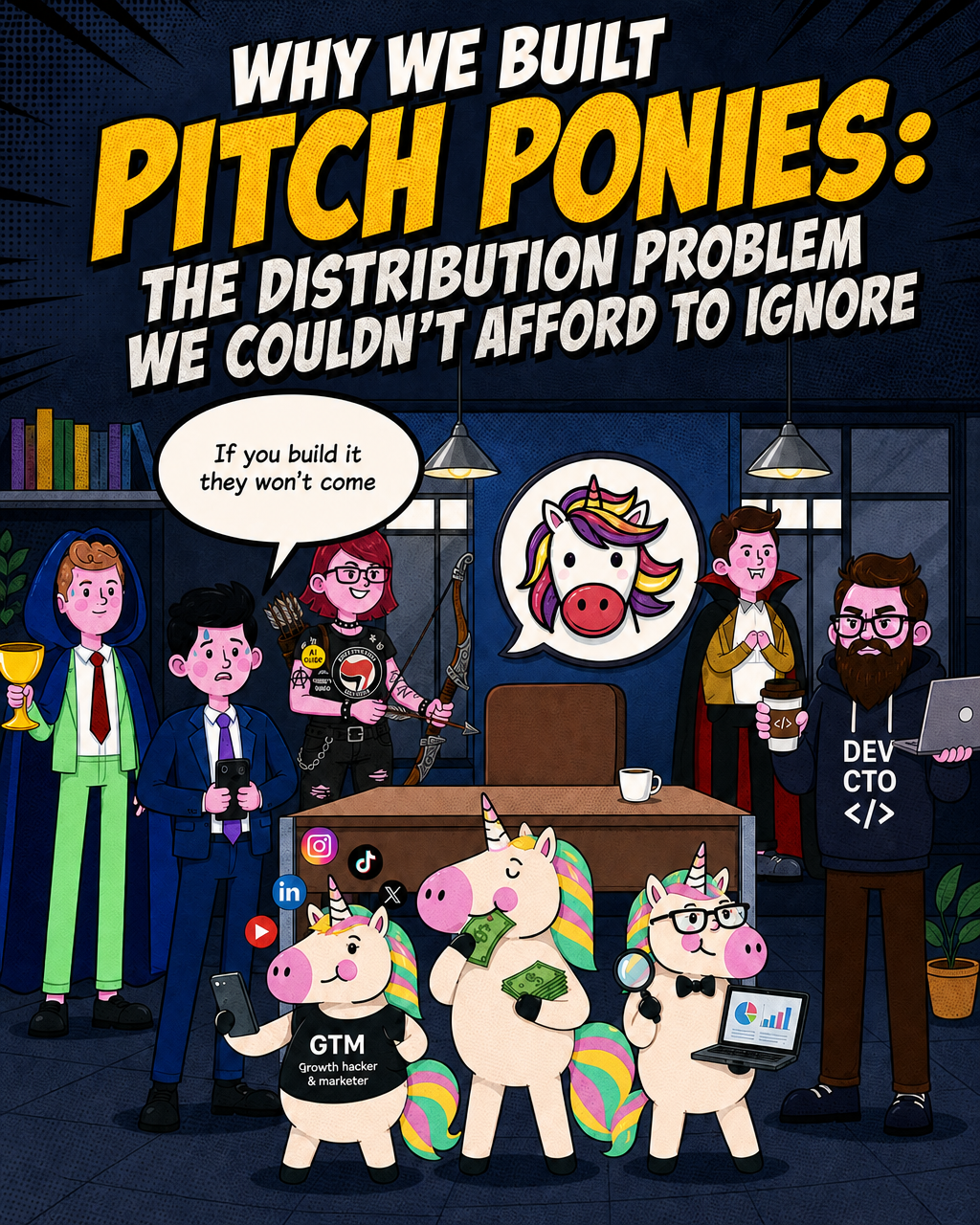
People don't follow brands. They follow characters. As an analogy: they follow the Duolingo owl, not language learning in the abstract. Familiarity compounds. When a face shows up in the feed that a reader has seen before, the cognitive load drops and attention rises.
The engagement data in 2026 backs this up. Research from multiple analytics firms suggests carousel and multi-image posts on LinkedIn tend to generate higher engagement than single-image posts, though figures vary by source, industry, and methodology. The reason isn't design polish. Industry analysis of observed platform behaviour suggests LinkedIn's algorithm rewards dwell-time signals — such as a user swiping through a multi-panel post — though LinkedIn has not publicly confirmed the precise weighting of these signals in its ranking system.
Comic-strip style posts, with a recognisable face across each panel, are built for dwell time. Readers swipe because they want to know what happens next. That habit starts on panel one and carries across every post you publish.
The episode framework: each post picks up where the last one left off
Here's the shift that changes everything. Stop thinking about your weekly post as a standalone piece of content. Start thinking about it as an episode.
A TV show doesn't reintroduce its cast every episode. It picks up the story. Your content can do the same thing. The character your audience met last week is back. Same face. New situation. The product update from this week becomes the plot, not just the headline.
The episode framework works like this:
- Week 1: Your character encounters a problem your product solves. They try to do things the old way.
- Week 2: The old way fails. The character is stuck and frustrated.
- Week 3: They find your product. Something shifts.
- Week 4: They're using it. Showing the outcome.
- Week 5: A new problem appears. The cycle starts again.
Notice what happens across six posts: the audience has watched something. They've been on a journey. By post six, they're not just seeing your brand, they're tracking it.
The four-panel narrative arc
You don't need a writer's room to pull this off. You need one reliable structure, applied every week.
The four-panel arc is this:
Setup. Your character faces a recognisable problem. Something your target reader has felt. The goal here is quick identification, not explanation. One panel, one relatable situation.
Conflict. The obvious solution fails. This is where you earn credibility. You're not pretending everything is easy. The character tries the old way, and it doesn't work. This is the moment where your reader nods.
Resolution. The product solves it. Not with a billboard, but as a natural story beat. The character uses the thing, and the situation turns. This is your product in context, not on a pedestal.
Teaser. End with a hint at next week's tension. One panel. One unresolved thread. Give your audience a reason to come back. This is the frame at the end of a Netflix episode that makes you hit play again.
Four panels. One brief. One post. Repeat weekly.
Characters don't need dialogue, they need a recognisable face
This is the part that trips most founders up. They assume a character means writing clever quips and crafting a whole personality. It doesn't.
A character needs one thing to be effective: consistency. The same face, the same visual style, the same rough personality cue, post after post. Many content creators find that a simple, consistent template — using the same font, colour palette, and layout per slide type — outperforms visual variety for audience recognition, though results will vary by audience and platform. Recognition beats novelty.
The same principle applies to your character. Your reader doesn't need a biography. They need to recognise the face in their feed and immediately know they're watching the next episode of something they've seen before. That recognition is the entire mechanism. It's what turns a viewer into a follower.
Visual consistency is the only thing you need to protect. The story can change every week. The character cannot.
One brief, consistent output forever
Here's the operational advantage that most content creators miss.
Building your character brief once means you never have to rebuild it. The personality, the visual style, the voice, the costume details: those get locked in on day one. Every future post inherits them. Multi-panel posts tend to hold attention longer than single images, as readers must swipe through multiple frames — a behaviour that signals engagement to the platform's algorithm. But more importantly for founders, it means the creative work is front-loaded. You brief the character once. The character works for you every week after that.
This is the structural difference between a content system and a content scramble. Most founders scramble. They open Canva on Sunday, stare at a blank template, write something generic, publish it Monday, forget about it, repeat. The episode framework gives you a repeatable production loop. Same arc, new situation, same character.
The front-loaded brief setup means ongoing posts can take less time than starting from scratch each week, though individual results will vary depending on production workflow and content complexity.
What this looks like for a real product update
Let's make it concrete. Say you just shipped a feature that lets users schedule posts in advance. Here's what the episode looks like:
- Panel 1 (Setup): Your character, frazzled, is staring at a content calendar with seventeen different tabs open.
- Panel 2 (Conflict): They try to post manually across three platforms at the same time. Something goes wrong. The wrong post goes to the wrong channel.
- Panel 3 (Resolution): They set up the scheduling feature. One click, everything queued, they go make coffee.
- Panel 4 (Teaser): The character looks confident. Caption reads: "Next week we find out what happens when someone else tries to do this manually."
The product update is communicated. The value proposition is demonstrated in context. The audience has something to watch. And the follow button is now the logical next move for anyone who wants to see what happens next.
How to get started this week
You don't need a large audience for this to work. Platform research suggests consistent weekly posting is associated with faster follower growth than monthly posting, though the precise magnitude of that effect varies by account type, industry, and audience. Consistency is the unlock, and characters make consistency cheaper to maintain.
The starting point is simple:
- Pick one character. It can be a version of you, a mascot, or a fictional persona that represents your customer.
- Write the brief. Describe how they look, how they feel, what they wear, and how they behave in a crisis.
- Map the first four-post arc. Set up a problem your product solved in the last month. Use the setup/conflict/resolution/teaser structure.
- Publish post one this week. Not next month. This week.
The audience doesn't wait for you to be ready. They wait for the next episode.
Disclosure: this post was produced by Pitch Ponies and describes their own product and approach. The character-based episode framework works best for founders and small teams who publish regularly on social platforms; it may be less suited to enterprise brands, regulated industries, or organisations requiring multi-stakeholder content approval. Other tools and content strategies are available.
Pitch Ponies locks in your brand characters after the first brief and generates a full multi-panel campaign from a single product idea, already formatted for LinkedIn, Instagram, and email. In most cases, no redesign, no separate style guide, and no illustrator are needed — see pitchponies.com for full details on what's included. Start your first episode at pitchponies.com and have post one ready before the week is out.
Save this if you want a content structure that carries momentum between

Pitch Ponies
Your go-to-market function, from week one.
Your go-to-market function, from week one.
Learn more about Pitch Ponies and get started today.
Visit Pitch Ponies